
Guide to Prince of Wales Fort National Historic Site: History, Highlights, and Visitor Tips

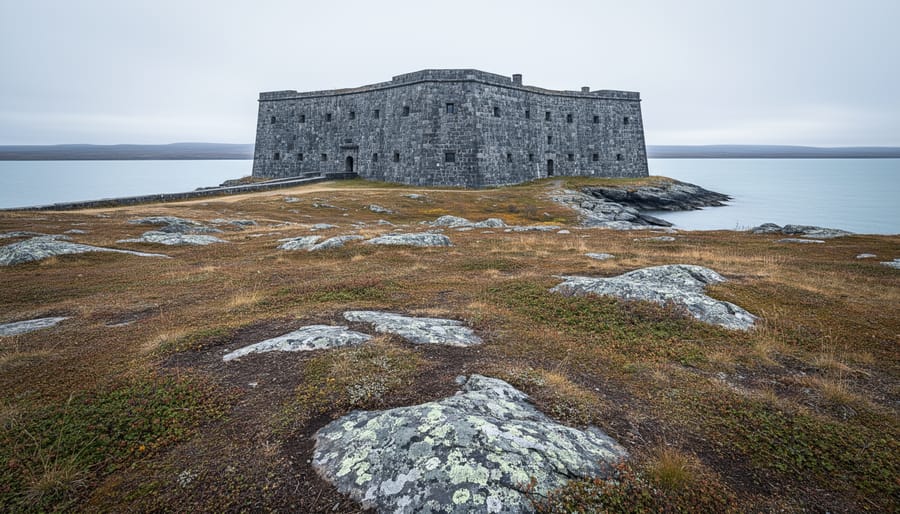
Prince of Wales Fort National Historic Site stands at the mouth of the Churchill River where Hudson Bay’s icy waters meet the tundra, a massive stone fortification that took 40 years to build and remains one of North America’s most impressive examples of 18th-century military architecture. This remote outpost, accessible only by boat or tundra vehicle from Churchill, Manitoba, offers visitors a rare glimpse into the fierce competition for North America’s fur trade, where the Hudson’s Bay Company constructed these thick stone walls between 1731 and 1771 to protect their northern interests from French rivals.
The fort’s star-shaped design and 40-foot walls tell stories of ambition and hardship in equal measure. Walking through its stone passages today, you’ll find yourself transported to an era when this isolated garrison represented the edge of European influence in the New World. The surrounding landscape adds another dimension to any visit: beluga whales often cruise the river mouth in summer, while polar bears patrol the coastline in fall, creating an experience that blends human history with the raw power of subarctic wilderness. Most visitors combine their fort exploration with Churchill’s other attractions, making the journey to this UNESCO-recognized site part of a broader northern adventure.
Why Visit Prince of Wales Fort
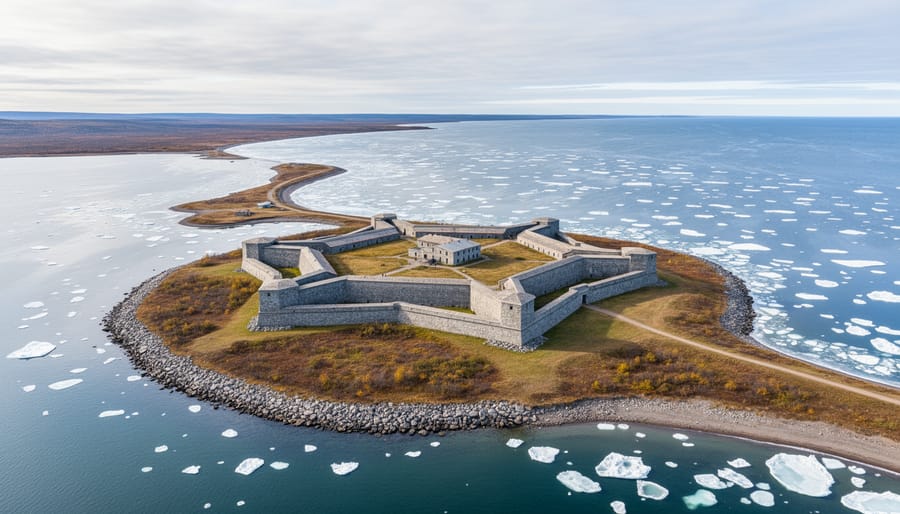
Prince of Wales Fort stands as one of the most impressive stone fortifications in North America, and visiting this remote historic site offers an experience unlike anything else in Canada. Built over 40 years in the 18th century at the edge of Hudson Bay, the fort showcases extraordinary engineering and ambition in one of the world’s harshest climates.
The architectural significance alone justifies the journey. These massive stone walls, rising from the tundra where the Churchill River meets Hudson Bay, represent decades of labor and the strategic importance European powers placed on controlling northern trade routes. You can walk among 42 cannons and explore walls that reach 40 feet thick in places, all constructed from quarried stone transported to this unforgiving landscape.
But Prince of Wales Fort offers more than history. The location itself is breathtaking. Standing atop the fortifications, you’ll watch the vast expanse of Hudson Bay stretch to the horizon while tidal flats reveal themselves twice daily. During summer months, beluga whales surface just offshore, their white bodies visible against the dark water. Arctic foxes dash among the ruins, and migratory birds wheel overhead in stunning numbers.
The site also tells crucial stories about Indigenous peoples and colonial history. For centuries before European arrival, this area served as a meeting place for Dene, Inuit, and Cree nations. The fort became a complex hub of cultural exchange and trade relationships that shaped northern Canada’s development.
This combination of dramatic wilderness, wildlife encounters, and living history creates something rare: a destination where nature and human story intertwine so completely that neither makes sense without the other.
Top Features and Highlights at the Fort
1. The Massive Stone Fortification
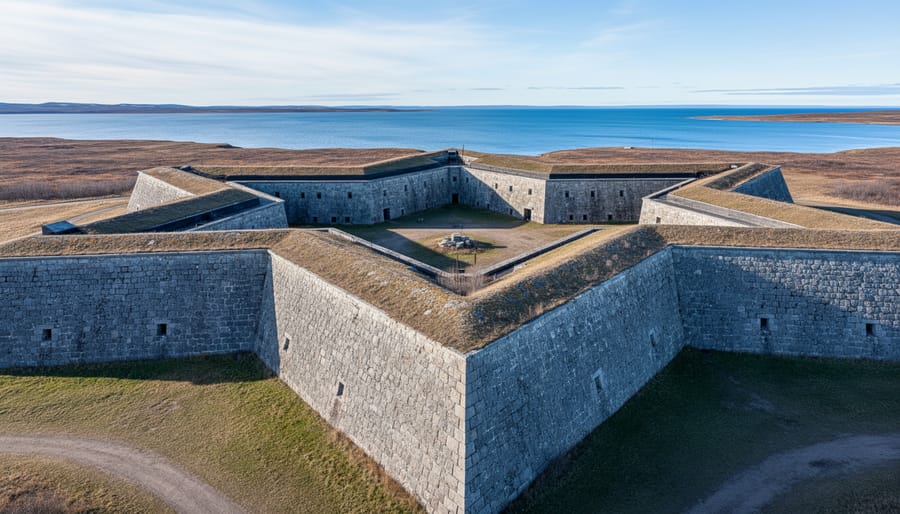
Standing before the stone walls of Prince of Wales Fort, you’re looking at one of the most ambitious construction projects in 18th-century North America. The Hudson’s Bay Company spent 40 years building this defensive stronghold, from 1731 to 1771, using limestone quarried from the nearby shoreline and transported by hand.
The fort’s star-shaped design follows European military architecture of the period, with four pointed bastions creating overlapping fields of fire. These walls stretch 40 feet thick at the base, tapering as they rise roughly 17 feet high. Each bastion originally mounted cannons, 42 in total, positioned to defend against attack from any direction. Most of these iron guns remain in place today, their barrels now rusting and tilted at odd angles, pointing toward Hudson Bay as they have for over two centuries.
Walking through the fort’s corridors and along the ramparts reveals the scale of manual labor involved. Every stone was cut, shaped, and positioned without modern machinery. The builders dug deep foundations into the permafrost, creating powder magazines and storage rooms beneath the main level that you can still explore.
Ironically, despite this massive investment, the fort never saw combat. When French forces arrived in 1782, Governor Samuel Hearne surrendered without a fight. The French burned the wooden buildings inside but left the stone walls intact, creating the atmospheric ruins visible today.
2. Hudson Bay Shoreline and Tidal Flats
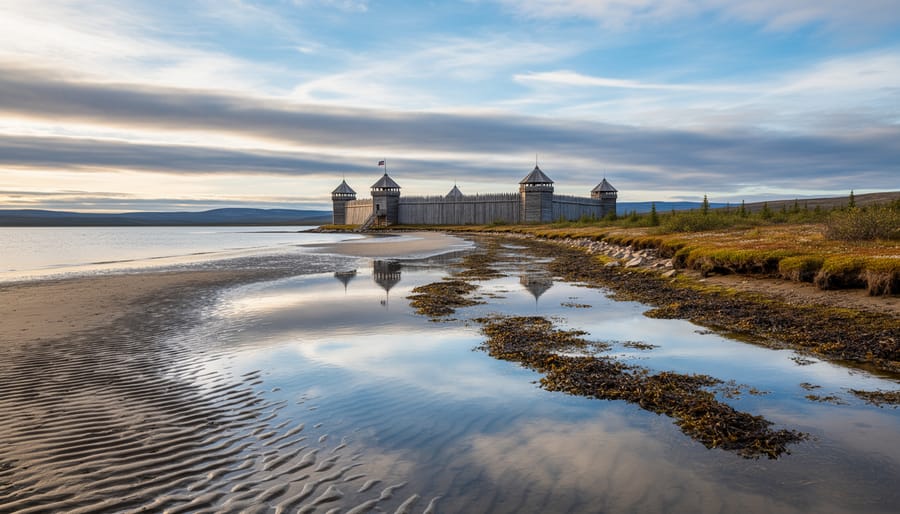
The fort’s position at the mouth of the Churchill River offers one of the most striking landscapes in Canada’s north. Standing on the massive stone walls, you look out over the grey-green waters of Hudson Bay stretching to the horizon, while behind you the Churchill River flows into this vast inland sea. The confluence creates a constantly shifting environment as powerful tides rise and fall up to 13 feet twice daily.
During low tide, expansive mudflats emerge along the shoreline, revealing a world usually hidden beneath the surface. These flats attract shorebirds and create ideal conditions for spotting beluga whales cruising just offshore. The exposed beach becomes accessible for exploration, where you can walk among rounded boulders, driftwood carried from distant forests, and occasionally discover smooth pieces of sea glass worn by the relentless waves.
The landscape here is uncompromisingly beautiful in its starkness. Vegetation clings low to the ground, shaped by fierce winds that sweep across the bay. The sky feels enormous, often filled with dramatic cloud formations that change the light from moment to moment. In summer, the midnight sun creates extended golden hours perfect for photography, while the cold northern air keeps everything crisp and clear. This meeting of land, river, and sea explains exactly why the Hudson’s Bay Company chose this spot to anchor their northern trade empire.
3. Wildlife Viewing Opportunities
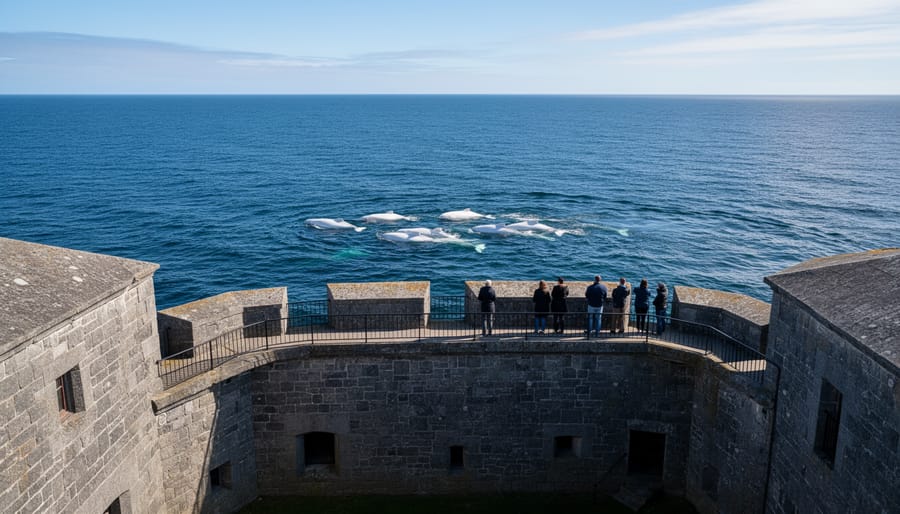
The fort’s position where the Churchill River meets Hudson Bay creates exceptional wildlife viewing that rivals the historical attractions. From late June through August, hundreds of beluga whales gather in the estuary just offshore, often close enough to hear their vocalizations echoing across the water. The stone walls provide an elevated vantage point for watching these white whales feed, socialize, and nurse their calves in the shallow waters below.
Arctic foxes frequently patrol the shoreline hunting for ground squirrels that burrow among the ruins. These foxes have grown somewhat accustomed to human presence, though they maintain their wild nature. Ground squirrels pop up from crevices in the stone walls throughout summer, providing both entertainment and prey for the resident predators.
The tidal flats attract shorebirds during migration periods. Scan for plovers, sandpipers, and occasionally rare arctic species. The exposed location makes it prime hawk-watching territory during fall migration.
Polar bears pass through the area year-round, though visitors won’t encounter them during the summer boat-access season when tours operate. Parks Canada monitors bear activity closely and adjusts access accordingly. For comprehensive wildlife preparation, check our beluga whale tips and broader eastern shore wildlife viewing guide before your visit.
4. Interpretive Programs and Guided Tours
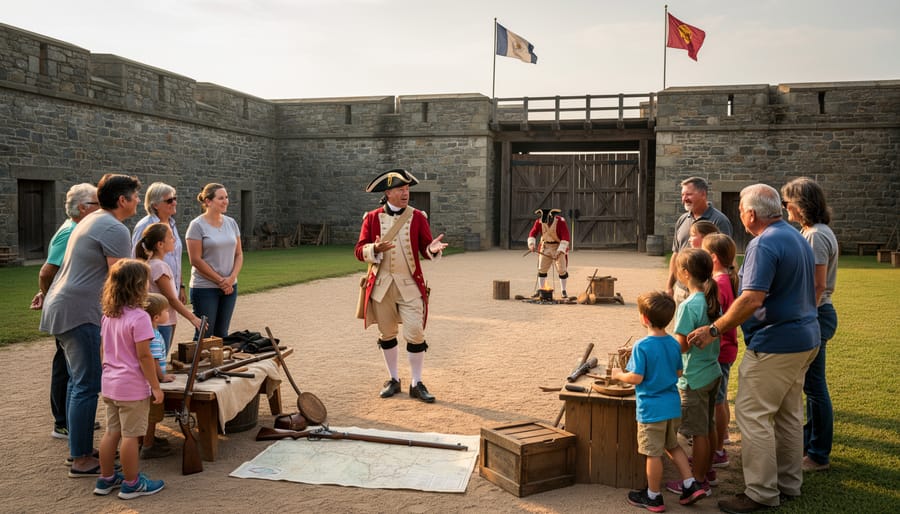
Parks Canada offers interpretive programs that bring the fort’s layered history to life through knowledgeable guides and hands-on demonstrations. Most visitors experience the site as part of organized boat tours that include a guided walk upon arrival. Parks staff lead you through the sprawling ruins, explaining how the Hudson’s Bay Company operated this remote outpost and the daily challenges faced by the small garrison who lived here.
Guides focus on three main historical threads: the fort’s strategic military purpose in protecting England’s fur trade monopoly, the complex economic relationships between European traders and Indigenous peoples who brought furs from across the subarctic, and the grueling construction process that took four decades to complete. You’ll learn about the 1782 French naval attack that destroyed much of the fort without a shot fired, and why this massive structure became obsolete almost as soon as it was finished.
During summer months, some programs feature costumed interpreters demonstrating period activities like musket loading, navigational techniques, or fur trade protocols. The interpretive approach emphasizes multiple perspectives, not just the European colonial story but also how Dene, Cree, and Inuit communities shaped trade networks and the fort’s ultimate success or failure. Tours typically last 90 minutes to two hours, giving you time to explore the powder magazine, walk the perimeter walls, and ask questions about specific architectural features or historical events that intrigue you.
5. The Historic Powder Magazine
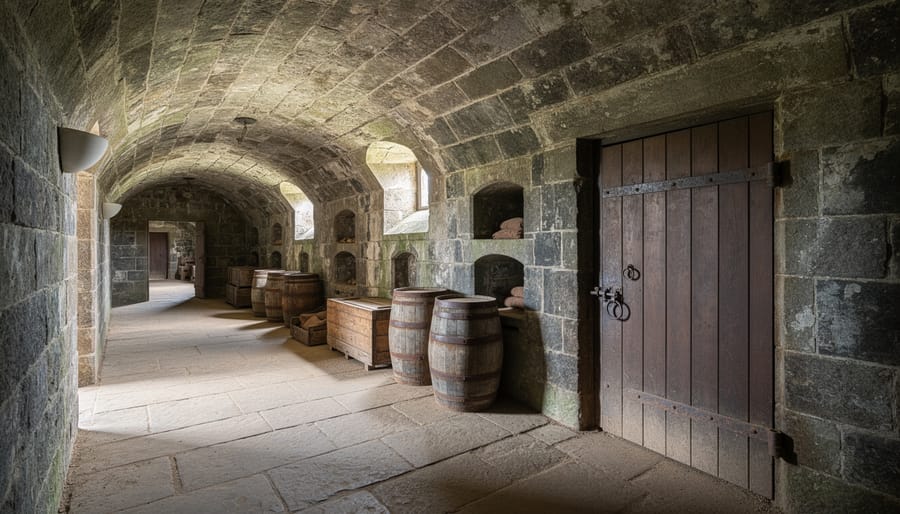
The powder magazine stands as the most intact structure within the fort’s sprawling ruins, its careful preservation offering visitors a tangible connection to the site’s military function. Built between 1733 and 1735, this vaulted stone building was designed specifically to safely store the fort’s critical supply of gunpowder away from living quarters and the main defensive positions.
Unlike the fort’s massive perimeter walls, which were built directly on exposed bedrock, the powder magazine features a distinctive arched roof construction that helped regulate temperature and humidity to protect the volatile explosives. The walls, though thinner than the outer fortifications, were still substantial enough to contain potential explosions and prevent catastrophic damage to the rest of the compound. Copper nails were used throughout the structure instead of iron to reduce spark risk.
Today, visitors can walk around the exterior and peer through the entrance to see the barrel-vaulted ceiling and stone craftsmanship that has endured more than 280 years of harsh subarctic weather. The building’s remarkably good condition demonstrates the skill of the stonemasons who constructed it and provides a glimpse of what the completed fort might have looked like before its partial destruction in 1782.
6. Indigenous History and Trade Connections
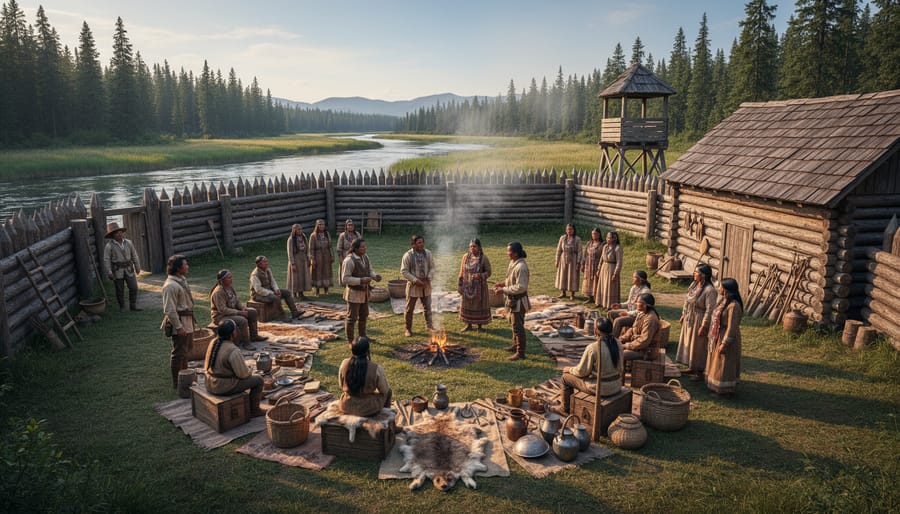
Long before the Hudson’s Bay Company began construction in 1731, the Churchill River estuary served as a vital gathering place for Dene, Cree, and Inuit peoples who traded, fished, and traveled through the region for generations. The fort became a focal point for this existing trade network, drawing Indigenous trappers who exchanged beaver pelts, caribou hides, and Arctic fox furs for European goods like metal tools, blankets, and firearms.
These weren’t simple transactions. Indigenous traders were skilled negotiators who understood market dynamics and often played competing European companies against each other. Women frequently led trade delegations and held significant economic power in these exchanges. The fort’s thick walls reflect European anxieties about control, yet the Company’s survival depended entirely on Indigenous knowledge of the land, trapping techniques, and seasonal movements.
The relationship was complex and often exploitative. European diseases devastated Indigenous populations, while the fur trade disrupted traditional ways of life and created new dependencies. Today, Parks Canada works with local Indigenous communities to present a more complete history that honors their central role in the region’s story. Interpretive programs increasingly incorporate Indigenous perspectives on the fort’s meaning, acknowledging both the cultural exchange and the colonial impacts that reshaped the North.
7. Photography and Scenic Views
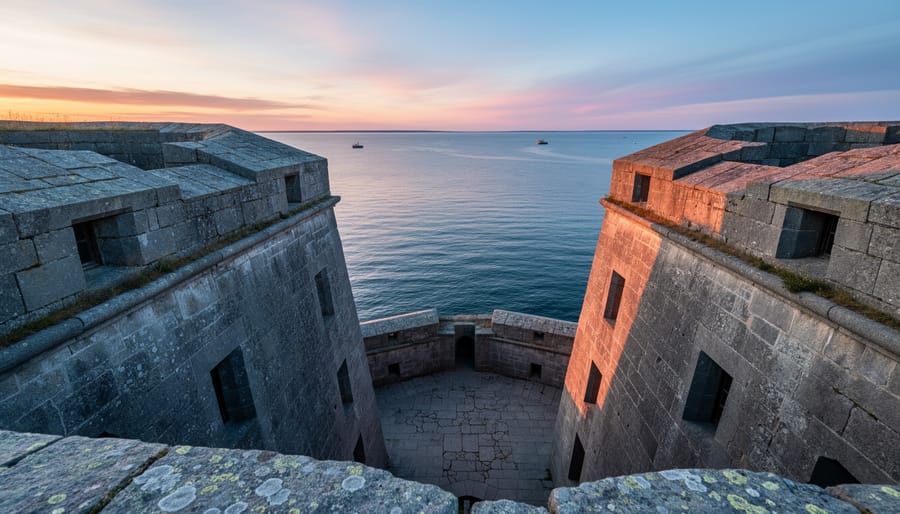
Prince of Wales Fort offers extraordinary photographic opportunities where centuries-old stone architecture meets the raw subarctic landscape. The fort’s weathered walls create striking compositional elements against the endless horizon of Hudson Bay, particularly when captured with a wide-angle lens that emphasizes the structure’s imposing scale and isolation.
The golden hours deliver the most dramatic lighting. Dawn bathes the eastern-facing walls in soft, warm light while casting long shadows across the stone surfaces that accentuate texture and depth. Dusk transforms the scene entirely, the low arctic sun illuminates the fort from the west, turning the massive walls amber while the bay reflects pinks and oranges. These times also provide the calmest winds for steadier shots.
Position yourself along the shoreline for powerful perspectives showing the fort’s relationship to Hudson Bay. Low angles emphasize the wall thickness and convey the structure’s defensive purpose. From inside the fortification, frame shots through cannon embrasures toward the water, creating natural foregrounds that add depth.
For wildlife photography, keep a telephoto lens ready for beluga whales offshore during July and August. Scan the tidal flats for arctic foxes and ground squirrels, especially in early morning. Always maintain safe distances, this is polar bear territory, and your guide’s instructions take priority over any photograph.
Getting to Prince of Wales Fort
Once you get to Churchill reaching Prince of Wales Fort requires crossing the Churchill River, as the site sits on a remote peninsula with no road access. Three transportation options are available during summer months:
| Transportation Method | Duration | Approximate Cost | Best For |
|---|---|---|---|
| Scheduled Boat Tour | 3-4 hours total | $80-150 per person | Budget travelers, groups, beluga watching |
| Private Charter Boat | Flexible timing | $500-800 per boat | Small private groups, custom schedules |
| Helicopter Charter | 10-15 minutes each way | $1,500+ per trip | Photography, weather challenges, time constraints |
Most visitors choose scheduled boat tours departing from the Churchill waterfront near the Itsanitaq Museum. These typically run daily during peak season but depend heavily on tides, river conditions, and weather. Tours include the river crossing, two to three hours of exploration time at the fort, and often pass through beluga whale pods during the return journey.
Book tours at least several weeks ahead during July and August. Departure times shift with tidal schedules, so exact times aren’t confirmed until a day or two before. The boat ride itself takes 30 to 45 minutes each way, and you’ll likely get wet from spray, so waterproof gear is essential. Captains watch for polar bears along the shore and may adjust routes for wildlife sightings.
When to Visit: Seasons and Timing
Prince of Wales Fort is accessible only from late June through early September, when ice-free conditions allow boat crossings from Churchill. This narrow window means timing your visit carefully can make a significant difference in your experience.
July and August represent prime visiting season, when you’ll find the warmest weather (highs around 12-18°C) and the most reliable boat departures. Mid-July through mid-August is peak beluga whale season, when thousands of whales gather in the Churchill River estuary. If seeing belugas is a priority, this six-week period offers your best chance to spot them from the fort’s shoreline while boats pass through pods offshore.
Here’s what to consider for each part of the season:
- Late June to early July: Longer daylight hours (nearly 18 hours), fewer crowds, but cooler temperatures and possible lingering ice
- Mid-July to mid-August: Peak beluga season, warmest weather, most tour departures, but highest visitor numbers and prices
- Late August to early September: Fewer mosquitoes, autumn colors beginning, cooler temperatures, shorter days, and reduced tour frequency
- Parks Canada typically operates the site from early July to late August, with interpretation programs most consistent during this period
Winter access is impossible due to frozen Hudson Bay and extreme cold. The fort remains buried in snow from October through May, with no boat service or tours available. Plan other Churchill activities like the Eskimo Museum or Itsanitaq Museum for the same trip, since most visitors spend 2-3 days in the area to justify the travel investment.
What to Bring and Wear
Churchill’s subarctic climate and the fort’s exposed shoreline position demand serious preparation. Pack clothing in layers: a moisture-wicking base layer, insulating mid-layer (fleece or wool), and a waterproof, windproof outer shell. Even in July and August, temperatures hover between 10-15°C (50-59°F), and the wind chill off Hudson Bay can make it feel much colder.
Sturdy, waterproof hiking boots or trail shoes with good ankle support are essential. The fort’s uneven stone surfaces, rocky shoreline, and tidal flats can be slippery and challenging to navigate. Bring a warm hat, gloves, and a scarf or neck gaiter. Sun protection is equally critical, the subarctic sun reflects intensely off water and stone. Pack sunglasses, high-SPF sunscreen, and lip balm.
Since there are no facilities at the site, carry water, snacks, and any personal items you’ll need. A small daypack works well for organizing your gear. Binoculars enhance wildlife viewing, and a camera with extra batteries (which drain faster in cold conditions) captures the dramatic landscape. Bug spray can be useful in July when insects are most active near the shore.
Local Tips for Your Visit
Book your boat tour at least two months ahead if you’re visiting in July or August, Churchill’s peak beluga season fills up fast, and fort tours often sell out weeks in advance. Once you’ve secured your spot, plan for a half-day commitment: the round-trip boat ride takes about 90 minutes, and you’ll want at least two hours on-site to explore the ruins properly without feeling rushed.
Dress in layers even if Churchill seems mild when you leave the dock. The fort sits exposed on a windswept point where Hudson Bay breezes can drop temperatures by 10 degrees and whip up suddenly. Pack a waterproof shell and wear closed-toe shoes with good grip, the uneven stone surfaces and tidal rocks can be slippery.
Resist the urge to climb the walls, no matter how sturdy they look. The 250-year-old stonework is fragile, and Parks Canada staff monitor for damage. Stay on marked paths and respect roped-off areas to preserve the site for future visitors.
Keep your eyes on the shoreline and surrounding tundra. While polar bears rarely appear during summer months, they’re never impossible in Churchill. Your tour guide will carry deterrents and know protocols, but stay aware of your surroundings.
Combine your fort visit with a beluga boat tour if your schedule allows, many operators offer combination packages that maximize your time on the water. This pairs beautifully with other first-time visitor tips for making the most of Churchill’s unique attractions in a single trip.
Frequently Asked Questions
How long does a visit to Prince of Wales Fort take?
Most guided tours allocate 2-3 hours total, including boat travel time across the Churchill River (roughly 30 minutes each way) and 60-90 minutes exploring the fort ruins and shoreline.
Can you walk to the fort from Churchill?
No, the fort sits across the Churchill River from town and is only accessible by boat, helicopter charter, or organized tour, there’s no bridge or road access.
Are there facilities like bathrooms at the site?
The fort has no amenities, no washrooms, shelter, or water. Plan accordingly and use facilities in Churchill before departure.
What about polar bear encounters?
While sightings are possible (the fort area is polar bear habitat), tour operators follow strict polar bear safety protocols including monitoring and carrying deterrents. Guides are trained to handle wildlife situations.
What does a tour typically cost?
Guided boat tours generally range from $100-180 CAD per person depending on the operator and season, with private charters and helicopter access costing considerably more.
Is the fort suitable for children or visitors with mobility issues?
The uneven stone surfaces, crumbling walls, and lack of railings make the site challenging for young children and anyone with mobility limitations. Discuss specific needs with tour operators beforehand.
Beyond these logistics, visitors often wonder whether they should book their fort excursion as part of a package or separately, most Churchill tour companies offer combination trips pairing the fort with beluga whale watching, which maximizes your time on the water and often provides better value than booking each separately.
