
Churchill Belugas: 8 Essential Whale Watching Tips for Your Arctic Adventure

Every summer, thousands of beluga whales transform Churchill into the world’s most accessible Arctic marine wildlife destination. Successfully experiencing these “canaries of the sea” in their natural habitat requires thoughtful timing, proper gear selection, and choosing the right tour format for your comfort level and photography goals.
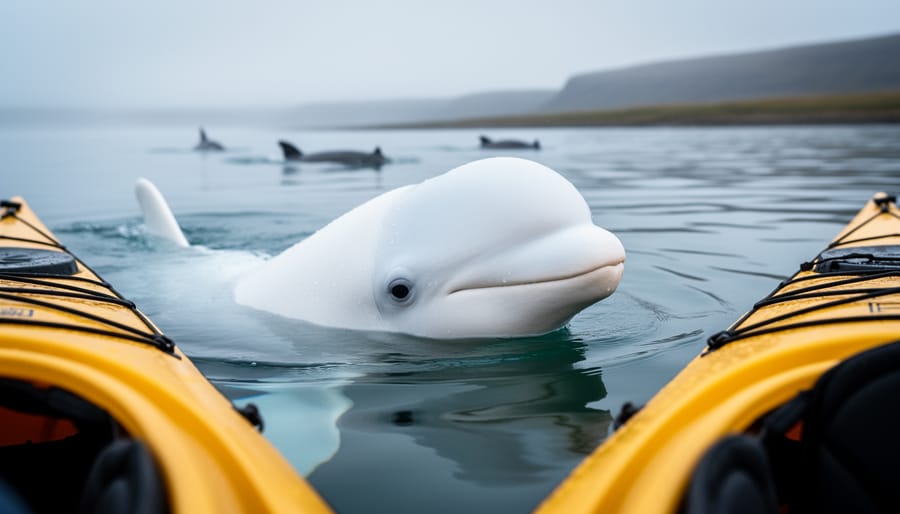
Churchill sits where the Churchill River meets Hudson Bay, creating a unique estuary environment that draws approximately 3,000 beluga whales each July and August. The warm, shallow waters serve as a nursery and molting ground for these highly social Arctic whales, who come right up to boats and kayaks with genuine curiosity. Unlike many wildlife encounters that demand patience and distance, Churchill’s belugas actively investigate human visitors, often whistling, clicking, and even making eye contact through kayak hulls and specially-designed boat windows.
Planning your beluga encounter goes far beyond simply booking a tour. Water temperature dictates whether you’ll need a wetsuit or drysuit for snorkeling excursions. Tour vessel choice determines your vantage point and comfort in variable weather. Understanding beluga behavior patterns helps you recognize pod dynamics and capture better photographs. The logistics mirror many first-time visitor tips for Churchill travel, but with added considerations for marine excursions.
The following eight tips address everything from seasonal timing through gear selection, tour format comparison, and on-water strategies that maximize your time with these remarkable Arctic whales.
When to Plan Your Beluga Encounter
The beluga migration to Churchill follows a remarkably predictable rhythm driven by ice melt and food abundance. Thousands of belugas begin arriving in late May as Hudson Bay’s ice breaks up, with the main migration peaking from mid-July through mid-August when the Churchill River estuary teems with up to 3,000 whales. The season extends into early September, though numbers gradually decline as whales start their journey back to deeper waters.
Early season visitors in late June and early July witness nursing mothers with newborn calves in the shallow warming waters, creating touching family scenes. The trade-off? Cooler air temperatures, lingering ice chunks, and slightly fewer whales overall. Mid-season from mid-July through early August delivers the full spectacle, massive pods, playful juveniles, and the warmest weather Churchill offers, with temperatures reaching 15-20°C. Late season in late August and early September brings smaller crowds, lower prices, and still-abundant whales, though you’ll sacrifice some daylight as days shorten noticeably.
Weather patterns significantly impact your viewing experience beyond simple comfort. Calm, sunny days create ideal conditions for spotting whales from boats and seeing them clearly through the water. Wind stirs up Churchill’s shallow waters, reducing underwater visibility and making surface behavior harder to photograph, though belugas remain present regardless. Heavy fog occasionally rolls in from Hudson Bay, particularly in early season, sometimes forcing tour delays or cancellations.
Churchill’s subarctic location means weather can shift dramatically within hours, even during peak summer. Your three-day visit might include brilliant sunshine, persistent drizzle, and everything between, so flexible scheduling across multiple days increases your chances of experiencing at least one spectacular viewing session.
Why Churchill’s Waters Draw Thousands of Belugas
Every summer, approximately 3,000 beluga whales converge on the Churchill River estuary, transforming these Arctic waters into one of the world’s most remarkable marine wildlife gatherings. What draws them here year after year is a rare combination of geography and ecology that beluga whales require for crucial life stages.
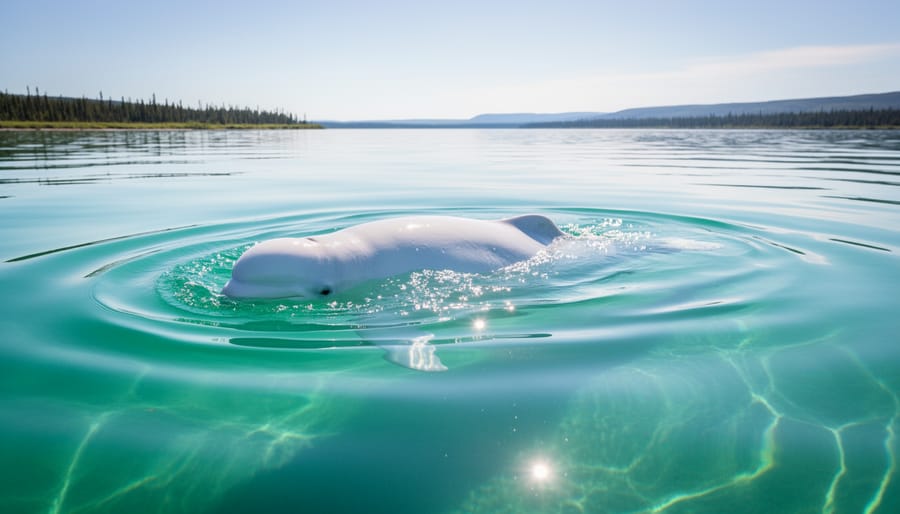
The estuary’s shallow waters warm considerably during summer months, reaching temperatures up to 10 degrees Celsius warmer than the surrounding Hudson Bay. For belugas arriving from deeper, colder waters, these sun-warmed shallows provide an ideal environment for nursing mothers and newborn calves. The warmth supports the calves’ development during their vulnerable first months of life.
Churchill’s river mouth also serves as a natural spa of sorts. Belugas frequently rub against the coarse gravel riverbed, exfoliating and shedding old skin. You’ll often see them rolling and turning in the shallows, behavior that’s both practical and playful.
The estuary teems with capelin, Arctic cod, and other small fish that fuel the belugas’ energy needs after their spring migration. This abundance of food, combined with the protected waters and gravel substrate, creates conditions found in few other places along the Arctic coast. Understanding these ecological factors transforms your viewing experience from simply watching whales to witnessing an essential chapter in their annual life cycle.
1. Choose the Right Tour Type for Your Comfort Level
Churchill’s beluga tours aren’t one-size-fits-all, and matching your comfort level to the right experience makes all the difference between a good trip and an unforgettable one.
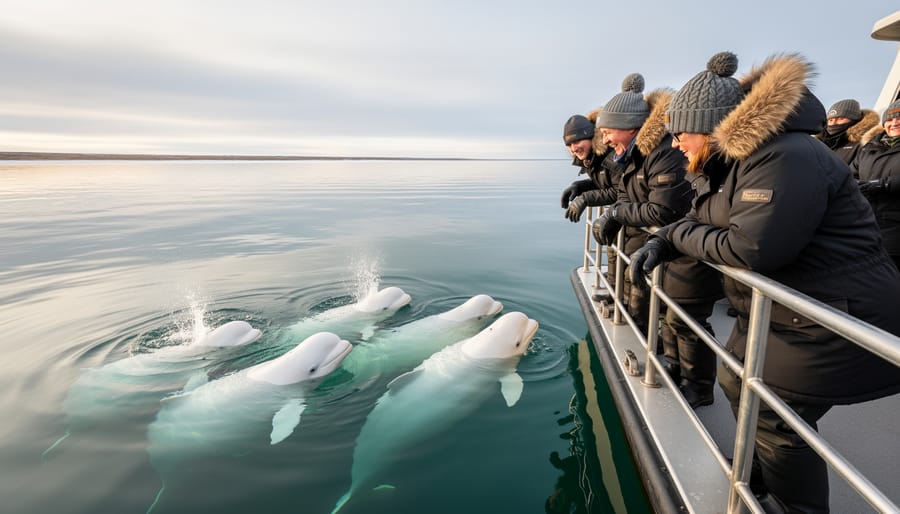
Zodiac boat tours remain the most popular choice for good reason. These rugged inflatable vessels get you remarkably close to beluga pods, often within a few metres, while keeping you dry and stable. The boats accommodate 6-12 passengers, making them social yet intimate enough for everyone to have prime viewing spots. If you’ve got basic mobility and can handle a slightly bumpy ride across the estuary, Zodiacs deliver maximum whale encounters with minimum physical demands. They’re ideal for families with older children, first-time whale watchers, and anyone who wants excitement without extreme exertion.
Kayak tours offer something entirely different: silence. Without engine noise, you’ll drift quietly among the belugas and hear their underwater vocalizations more clearly. The low profile of a kayak puts you at water level, creating an intimate perspective that feels more like joining the whales than simply observing them. You’ll need moderate paddling fitness and comfort with basic kayaking technique, though Churchill’s calmer estuary waters are forgiving for intermediate paddlers. These tours typically run 2-3 hours with guides who know where belugas congregate.
Stand-up paddleboard experiences push the adventure further. Balancing on a board while curious belugas surface beside you demands good core strength and SUP experience, but the reward is an unmatched sense of connection with these playful animals.
The most immersive option, underwater viewing in a dry suit, deserves its own consideration. You’ll actually enter the water, protected by a full-body suit, and float face-to-face with belugas as they investigate you. It requires no swimming ability since the suit keeps you buoyant, but you must be comfortable in water and able to climb boat ladders. Age restrictions typically start at 8-10 years, and some operators set weight limits for suit availability.
Here’s a quick overview to guide your choice:
- Zodiac tours: adventurous yet accessible, best for families and those wanting close encounters without getting wet
- Kayak tours: quiet and intimate, requires moderate fitness and basic paddling skills
- SUP experiences: physically challenging, demands balance and previous stand-up paddleboard experience
- Underwater viewing: most immersive option, needs water comfort but no swimming ability
Consider your physical condition honestly, but don’t let caution rob you of the right experience. A 70-year-old in good health can manage a Zodiac tour beautifully, while an underwater encounter might challenge a nervous 30-year-old. Many visitors book multiple tour types across several days, starting with a Zodiac to get oriented before trying something more adventurous.
2. Book Reputable Operators Well in Advance
Churchill’s remoteness works against last-minute planning. The town receives only about 800 summer visitors during peak beluga season, and tour operators run limited boats with strict capacity restrictions. Most reputable companies fill their July and August slots by March or April, especially for the coveted underwater viewing experiences. If you’re targeting the peak weeks in late July, booking six months ahead isn’t excessive, it’s necessary.
Quality operators share several hallmarks. Look for valid Transport Canada marine certifications and guides with naturalist training or marine biology backgrounds, not just boat captains. The best companies limit group sizes to 12-16 passengers per vessel, ensuring everyone gets unobstructed viewing and the guides can answer questions without shouting over crowds. Ask about their wildlife interaction protocols, responsible operators maintain minimum approach distances even when curious belugas swim closer on their own initiative.
Check online reviews, but read critically. A few mentions of canceled trips due to weather actually signals good judgment, not poor service, conditions can turn dangerous quickly in Hudson Bay. Look instead for consistent praise of guide knowledge, safety briefings, and respect for the animals.
Most tour companies partner with specific Churchill accommodations, and booking together often yields package discounts. Since lodging is equally limited, securing both simultaneously eliminates the headache of coordinating separate reservations across different time zones. This integrated approach also streamlines your arrival logistics, as many operators offer transfers from your hotel.
3. Dress in Layers for Unpredictable Weather
Churchill’s subarctic summer can surprise you with conditions ranging from warm sunshine to biting wind and drizzle, sometimes all in a single afternoon on the water. A proper layering system keeps you comfortable throughout your beluga encounter regardless of what the weather throws at you.
Start with a moisture-wicking base layer that pulls sweat away from your skin. Synthetic fabrics or merino wool work best; avoid cotton, which stays wet and saps your body heat. Your mid-layer provides insulation, a fleece pullover or lightweight down jacket traps warmth while remaining breathable. The outer shell is your armor against wind and water. A waterproof, breathable jacket with a hood protects you from spray kicked up during Zodiac rides and sudden rain squalls that sweep across Hudson Bay.
Most tour operators supply waterproof pants and float suits for boat excursions, but confirm what’s included when you book. That said, you’ll want to pack your own essentials:
- Waterproof gloves or mittens (even in July, wind chill on the water can be brutal)
- Warm hat or beanie that covers your ears
- Buff or neck gaiter to protect your face from spray
- Polarized sunglasses with a retention strap (the water’s glare is intense)
- Waterproof boots or shoes with good traction for wet boat decks
- Extra warm socks (wool or synthetic, not cotton)
Stuff everything into a dry bag or waterproof backpack. You can always shed layers if you warm up, but there’s no remedy for being underdressed two hours into a three-hour tour when the clouds roll in. Experienced guides will tell you: it’s better to carry a jacket than wish you had one.
4. Bring the Right Camera Gear and Protect It
Capturing belugas on camera requires preparation for Churchill’s unique challenges: fast-moving white subjects against reflective water, unpredictable spray, and constant boat motion. A DSLR or mirrorless camera with a telephoto lens (70-200mm or 100-400mm) gives you the reach and speed to freeze action, but modern smartphones can produce surprisingly good results if you understand their limitations.
Set your camera to shutter priority mode with speeds of at least 1/1000th of a second, belugas breach and roll quickly, and slower speeds blur their signature white bodies into ghostly smears. Continuous autofocus tracking helps maintain sharpness as whales surface and dive. Shoot in burst mode since belugas are unpredictable performers; you’ll delete dozens of near-misses to keep one perfect shot of a spy-hopping whale or a mother nudging her calf.
Water protection matters more than expensive gear. A simple rain cover or waterproof camera bag protects against splashes during Zodiac tours, while underwater housings open possibilities during snorkel encounters. Bring lens cloths, salt spray coats lenses within minutes on the water. Keep gear secured with straps; dropping equipment overboard ends your photography day instantly.
Smartphone shooters should enable burst mode, tap to focus on the whale’s eye or head, and accept that digital zoom degrades quality. The best smartphone whale photos often come from patient waiting rather than frantic zooming, belugas frequently approach boats within ten feet, close enough for excellent wide-angle shots that capture both whale and Arctic landscape. Your most memorable images will combine technical preparation with the patience to let these curious animals come to you.
5. Understand Beluga Behavior to Maximize Your Experience
Recognizing what belugas are doing transforms your encounter from simple observation into genuine connection. These highly social mammals display distinctive behaviors that reveal their intelligence, curiosity, and complex family structures, and knowing what to watch for means you’ll catch moments other visitors miss.
Spy-hopping ranks among the most thrilling behaviors you’ll witness. Belugas lift their heads vertically above the waterline, rotating slowly to scan their environment with those expressive eyes. They’re genuinely checking you out, assessing the boats and people around them. Unlike most whales, belugas have flexible necks that allow this remarkable head movement, a rare trait that makes each spy-hop feel like a personal greeting.
The vocalizations are equally captivating, though you’ll need to listen carefully or use the hydrophones many tour operators provide. Belugas produce clicks, whistles, chirps, and squeals that resemble bird songs, which is why whalers dubbed them canaries of the sea. These sounds serve multiple purposes: echolocation for navigation, communication within pods, and maintaining social bonds. On quiet water days, you might hear faint calls even without equipment.
Social interactions reveal their playful, intelligent nature. Watch for belugas rubbing against each other, they shed skin annually and use this contact to help the process along, or juveniles engaging in what looks like pure play, chasing and nudging one another. Mother-calf pairs stay remarkably close, with calves nursing and learning essential survival skills. The darker grey calves gradually lighten over several years, eventually reaching the iconic white that signals maturity.
Churchill’s belugas also display feeding behaviors, though they’re less dramatic than you might expect. They primarily feed on fish like Arctic cod and capelin, along with squid and marine worms. You might spot coordinated group feeding or individual belugas diving (they can stay under for 15-20 minutes). Understanding these patterns helps you appreciate why they gather here in such remarkable numbers, and why Churchill remains unmatched, even compared to destinations known for polar bear country or the thrilling dog sledding adventure.
6. Practice Responsible Wildlife Viewing
Approaching belugas requires awareness that you’re entering their home. Your guide will set clear boundaries, typically maintaining 50 to 100 meters from pods, but these curious whales often approach boats on their own terms. When they do, resist the urge to lean over the gunwale or reach toward the water. Stay seated, keep your voice low, and let them investigate at their pace.
Sudden movements and loud noises can startle entire pods. If you’re photographing, skip the camera flash. When belugas vocalize nearby, listen quietly rather than calling out in response. These aren’t performances; they’re wild animals engaged in natural behavior.
Churchill’s tour operators follow strict provincial wildlife regulations, including protected buffer zones during calving season and limits on vessel approach speeds. They’ve earned permits through demonstrated conservation practices, and violating their instructions jeopardizes these privileges. If a guide asks your group to move away from a pod or cut the engine, it’s to protect the whales’ well-being first.
This commitment to responsible viewing extends beyond your tour. When you’ve finished watching belugas and start thinking about how to get to Churchill or where to stay in Churchill choose operators and accommodations that actively support beluga research and habitat protection. Your visit, done right, funds the conservation that keeps Churchill’s waters welcoming to these remarkable marine mammals.
7. Consider the Underwater Viewing Experience
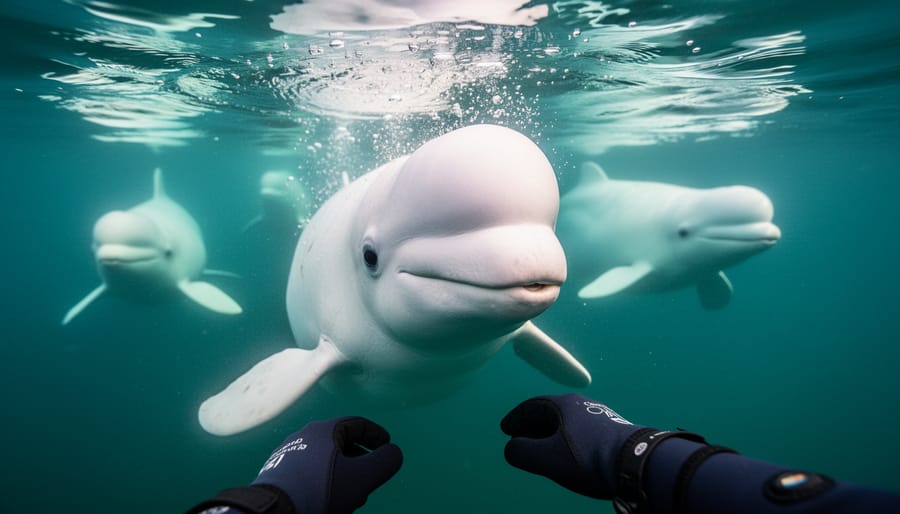
If you’re ready to take your beluga encounter to the next level, snorkeling alongside these curious whales in the Churchill River offers something truly extraordinary. Tour operators provide full-body dry suits that keep you completely dry and warm while you float at the surface, face mask submerged, as belugas glide beneath and around you.
These intelligent animals are remarkably inquisitive. They often approach snorkelers closely, making eye contact, vocalizing their signature chirps and whistles, and occasionally even blowing bubbles as if playing. The sensation of being in their world, hearing their haunting calls through the water, creates a connection no boat tour can match. Many visitors describe it as a life-changing experience.
Most operators require participants to be at least twelve years old and reasonably comfortable in water, though you don’t need swimming expertise since the dry suit provides buoyancy. Sessions typically last two hours, with actual in-water time around thirty to forty minutes depending on conditions. Guides remain in the water with your group and brief everyone thoroughly on safety protocols and how to move calmly to avoid startling the whales.
This option isn’t suitable if you have claustrophobia, significant mobility limitations, or extreme cold sensitivity. The dry suits fit snugly, and water temperatures hover around 10°C (50°F) despite summer air warmth. But if you can manage these considerations, the underwater viewing experience ranks among Churchill’s most profound wildlife encounters.
8. Combine Beluga Watching with Churchill’s Other Attractions
Churchill rewards travelers who extend their stay beyond a single beluga tour. The town’s compact size makes it easy to combine whale watching with other memorable experiences, creating a richer Arctic adventure.
Fort Prince of Wales, a massive stone fortress built by the Hudson’s Bay Company in the 1700s, sits at the mouth of the Churchill River. You’ll need a guided tour to reach it, but walking these windswept ramparts offers both historical context and stunning views of the estuary where belugas gather. The Miss Piggy plane wreck, a crashed cargo aircraft from 1979, has become an iconic photo opportunity just outside town, accessible by guided tour or fat-tire bike in summer.
The Itsanitaq Museum houses an exceptional collection of Inuit carvings and artifacts, providing cultural depth to your visit. Local artists often work in studios around town, and you can watch carvers transform stone and bone into remarkable pieces.
Churchill’s wildlife extends beyond belugas. Summer brings Arctic foxes, caribou, and over 270 bird species, including snowy owls and tundra swans. The same months that draw belugas also offer near-constant daylight for exploring the tundra landscape.
A three-to-five-day itinerary lets you experience multiple beluga encounters while avoiding the rushed feeling of a quick trip. You’ll return home with a fuller picture of why this remote community captivates visitors.
Planning Your Churchill Beluga Adventure
Getting to Churchill requires some advance planning, but the journey is part of the adventure. You have two main options: fly from Winnipeg (about 2.5 hours) or take the VIA Rail train, a scenic two-day journey through boreal forests and tundra that runs twice weekly during summer. Flights offer convenience, while the train provides a memorable overland experience that many travelers consider integral to their Churchill story.
Accommodation options range from full-service lodges that bundle whale watching tours into multi-night packages to independent hotels and cozy bed-and-breakfasts in town. Many properties work directly with tour operators, simplifying your booking and sometimes offering package discounts. During beluga season (mid-June through early September), rooms fill quickly, so secure lodging when you book your tours, ideally three to six months ahead for July and August visits.
How much does a Churchill beluga trip typically cost?
Expect $3,000-$5,000 per person for a 3-4 night package including flights from Winnipeg, accommodation, and multiple beluga tours. Budget travelers can reduce costs by taking the train and booking tours separately.
How long should I stay in Churchill for beluga watching?
Three to five days offers the best balance, allowing multiple whale encounters, weather buffer days, and time to explore Churchill’s historical sites and local culture.
Are beluga tours suitable for children and seniors?
Most boat tours welcome all ages, though underwater experiences typically require participants to be at least 12 years old. Zodiac tours can be bumpy, so consider your group’s mobility and comfort with active excursions.
Structure your itinerary with at least two separate beluga outings, weather can affect visibility, and different times of day showcase different behaviors. Leave room for Churchill’s historic Fort Prince of Wales, the fascinating Itsanitaq Museum, and shoreline walks where you’ll encounter Arctic flora and possibly Arctic foxes. The town itself is compact and walkable, making it easy to fill your non-tour hours with exploration.
Churchill offers something few places on Earth can match: the chance to meet thousands of beluga whales in their natural summer gathering grounds. These eight tips give you the foundation to turn that possibility into reality, whether you’re paddling quietly alongside curious whales, listening to their songs from a Zodiac, or floating face-to-face in a dry suit while they investigate you with evident intelligence.
The belugas return to these waters every summer because the Churchill River estuary provides exactly what they need, safety, warmth, food, and community. Your visit becomes part of a larger story about conservation, responsible tourism, and the delicate balance between human curiosity and wildlife protection. Churchill takes that stewardship seriously, and your tour operators will too.
Start planning now, especially if you’re eyeing the peak July and August season. Book your tours, arrange your accommodation, and prepare for weather that can shift within an hour. Pack your layers, charge your camera, and ready yourself for an experience that belongs on every wildlife lover’s bucket list.
These whales have been gathering here for millennia. This summer, you can witness that ancient ritual yourself, in one of the most accessible and spectacular wildlife encounters anywhere in the Arctic.
