
How Much Do Oats Cost Per Bushel Near You in Manitoba? (2026)

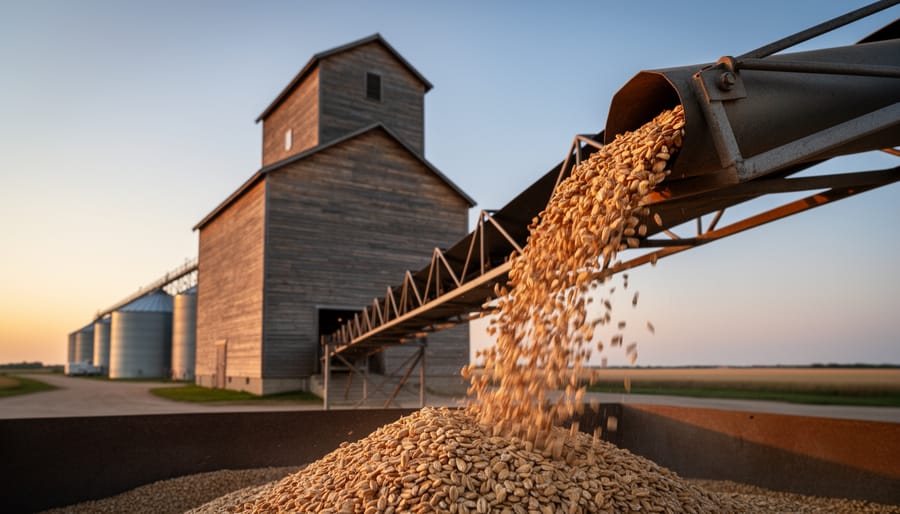
Oat prices in Manitoba currently range from $2.39 to $4.75 per bushel as of October 14, 2026, depending on grade and delivery location. If you’re looking for today’s price near you, the fastest route is checking your local grain elevator’s daily bid sheets or calling their office directly before noon, when most bids expire.
The price you’ll see varies by five main factors: your oat grade (1 CW through Extra 3 CW), delivery point distance from major rail lines, current basis (the local premium or discount to futures markets), freight costs to export terminals, and whether you’re selling spot or forward contract. A farmer in southern Manitoba near Winnipeg typically sees 15 to 30 cents per bushel more than someone hauling from a remote location, purely because of transportation economics.
Churchill’s historic grain port adds an interesting dimension to prairie pricing, though its influence today remains modest. After grain operations suspended in 2016 and the port reopened for other cargo in 2019, the facility saw its first grain shipments resume in July 2026. While Churchill once provided northern farmers a shorter route to international markets and competitive pressure on southern freight rates, its current limited operations mean most oat pricing still flows through Vancouver, Thunder Bay, and U.S. border crossings. As grain volumes rebuild through Churchill’s Arctic shipping window, the port’s role in regional pricing competition may grow, echoing the days when it shaped harvest strategies across the northern prairies.
Understanding your local basis and having multiple elevator quotes in hand gives you leverage when deciding to sell or store.
Current Oat Prices Per Bushel in Manitoba

As of October 14, 2026 at 8:37am MT, Bunge Manitoba lists 2 CW Oats at $2.39 to $4.75 per bushel. That’s the most recent verified pricing snapshot available for Manitoba’s oat market, and it gives you a baseline for what grain elevators across the province are currently offering.
The “2 CW” designation stands for No. 2 Canada Western oats, a standard commercial grade that meets federal quality specifications for moisture content, test weight, and acceptable levels of foreign material. It’s the most commonly traded oat grade in Western Canada, representing middle-tier quality, cleaner and heavier than feed-grade oats, but not premium No. 1 stock.
That $2.36 spread between the low and high end isn’t an error. It reflects real differences in what you’ll actually get paid depending on where you deliver. An elevator near Winnipeg with direct rail access to Thunder Bay might offer $4.50, while a country elevator two hours north with longer freight hauls could bid $2.60 for identical grain. Volume matters, too. Selling a semi-load gives you more negotiating power than hauling in a few tonnes in a grain trailer.
These prices shift constantly, sometimes multiple times in a single day, as global commodity markets react to weather forecasts, currency swings, export demand, and harvest pressure. The October 14 timestamp tells you these numbers were current at 8:37am Mountain Time, but by afternoon or the next morning, bids may have moved twenty cents up or down. That’s why calling your local elevator for today’s price remains essential, even when you have provincial averages in hand.
How to Find Local Oat Prices Near You
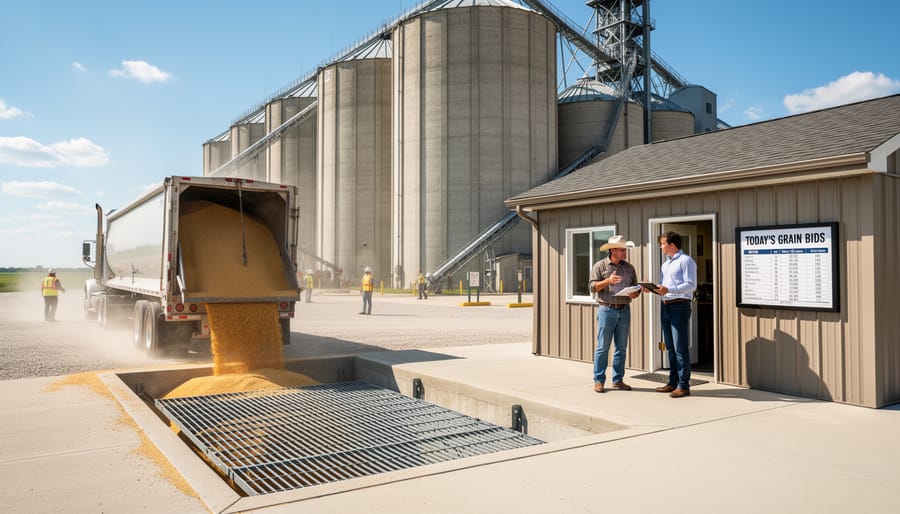
Finding the price for oats “near you” requires active legwork, because grain pricing is hyperlocal, what an elevator in Dauphin pays today won’t match a buyer in Brandon or Steinbach. Your specific price depends on your delivery location, the grade of your oats, and the terms you negotiate.
Start by identifying the grain elevators within a reasonable hauling distance of your farm or property. These are your primary buyers, and they set daily bids based on their own logistics, storage capacity, and contracts with end users. A quick online search for “grain elevator [your town or county]” will surface facilities in your area. If you’re near Churchill, ask locally about elevator operations and whether any buyers are actively taking grain through the port route.
Once you know your options, follow this process to get today’s price:
- Check online provincial grain price reports. Manitoba’s Farmbucks site and the Manitoba government’s agriculture pages publish updated elevator bids by location, often refreshed daily. These give you a baseline for what buyers are offering across the province.
- Identify your nearest grain elevators by name and location. Write down contact numbers for three to five facilities within your hauling radius, including any that offer Churchill delivery options if you’re in the north.
- Call those elevators directly and ask for today’s cash bid on the grade you’re selling, be specific about “2 CW Oats” or whatever grade applies. Prices change hour to hour during active markets, so online reports may lag behind what a buyer will pay right now.
- Compare quotes carefully, accounting for delivery terms. An FOB farm price means the buyer picks up at your gate; a delivered price requires you to haul the grain yourself, and your trucking cost eats into your net return.
- Factor in your grain’s actual quality, moisture content, test weight, and foreign material all affect grade, and a lower grade drops your payment per bushel. If your oats test at 14% moisture instead of the 13.5% standard, expect a dockage or a price adjustment.
Agricultural commodity brokers can also supply current bids from multiple buyers at once, saving you a dozen phone calls. If you’re marketing a large volume, brokers may negotiate better rates than you’d get solo. Farm supply cooperatives often post daily grain prices on bulletin boards or websites, especially in rural Manitoba towns where grain is the economic backbone.
The key takeaway: “near me” pricing isn’t something you look up once and rely on. It’s a moving target that you pin down by contacting your local market participants on the day you’re ready to sell or buy. The October 14, 2026 Bunge Manitoba range of $2.39 to $4.75 per bushel shows how wide the spread can be, your job is to find where you fit within that spectrum based on your location and grain quality.
What Determines the Price You Pay (or Receive)
The price you see at your local elevator isn’t pulled from thin air. It’s the result of multiple factors that shift daily, sometimes hourly, as global markets, grain quality, and local logistics interact. Understanding these variables helps you time your sales better or anticipate what you’ll pay if you’re buying oats for livestock or processing.
Grain Grade and Quality
Your oat sample determines where you start. Elevators classify oats by the Canadian Grain Commission’s grading system, 2 CW (Canada Western) being the premium grade most commonly traded. Test weight matters: heavier oats per bushel signal plump, well-filled kernels that millers and exporters prefer. Moisture content below 13.5% is standard; anything higher means drying costs that come off your price. Foreign material, chaff, weed seeds, dirt, lowers your grade and your payment. A sample grading 1 CW with low moisture and minimal dockage commands a premium, while 3 CW or feed-grade oats settle at the lower end of the range.
Key Pricing Variables at Your Elevator
Several factors converge to create the specific number on your settlement sheet or purchase invoice:
– Transaction volume: Selling a truck load receives different treatment than moving 10,000 bushels; larger volumes often secure better prices through reduced handling costs per unit
– Delivery location and distance: Elevators closer to rail terminals or export points offer tighter spreads; remote locations add freight that reduces your net price
– Seasonal timing: Harvest pressure in September and October floods elevators, depressing prices; off-season demand in late winter or spring typically lifts bids
– Currency fluctuations: Canadian oats priced for U.S. or overseas buyers move with CAD/USD exchange rates; a weaker loonie improves export competitiveness and lifts domestic prices
– Global commodity trends: Chicago Board of Trade oat futures, world feed grain supplies, and crop conditions in competing regions (U.S. Upper Midwest, Europe) set the baseline your local market tracks
– Port and rail logistics costs: Freight rates to Thunder Bay, Vancouver, or Churchill, plus terminal elevation charges, consume a portion of the final export value
These elements don’t operate in isolation. A strong global oat market paired with poor local quality still results in discounted prices at your elevator. Conversely, premium-grade oats delivered during harvest glut face downward pressure despite quality. Successful grain marketing means watching all variables and choosing your moment.
Where Your Oat Payment Goes: The Grain Pricing Chain

When you sell oats, the price per bushel you receive is far less than what the final buyer pays. Understanding where that money goes reveals why transportation infrastructure matters so much for prairie farmers.
Your net price at the farm gate is the starting point. From there, the local elevator takes its margin and charges handling fees, typically covering receiving, cleaning, storage, and loading your grain onto rail cars. These fees vary by elevator and volume, but they represent the first deduction from the commodity value.
Next comes rail freight to a terminal port. Shipping oats from central Manitoba to Thunder Bay, Vancouver, or Churchill involves significant costs per tonne. Rail rates depend on distance, route efficiency, and carrier contracts. A longer haul to Vancouver’s Pacific terminals costs more than a shorter run to Thunder Bay or Churchill, directly affecting what flows back to you as the seller.
At the terminal, elevation charges apply. These cover unloading rail cars, transferring grain into terminal storage, blending to meet buyer specifications, and loading vessels for export. Terminal operators charge per tonne handled, adding another layer between your farm price and the final sale.
For export shipments, most Canadian oats leave the country, vessel costs enter the equation. Freight rates for bulk carriers fluctuate with global shipping demand, fuel prices, and route competition. These maritime costs don’t affect your payment directly, but they influence what international buyers are willing to pay at Canadian ports, which in turn sets terminal bids and trickles back to elevator prices.
Each link in this chain consumes a portion of the final buyer’s price. That’s why the Churchill freight impact matters: a shorter rail distance and reduced handling steps mean more money potentially staying in farmers’ pockets. Distance to port, rail efficiency, and terminal access aren’t abstract, they’re the difference between a profitable crop and breaking even.
Churchill Port’s Historical and Emerging Role in Prairie Grain Pricing
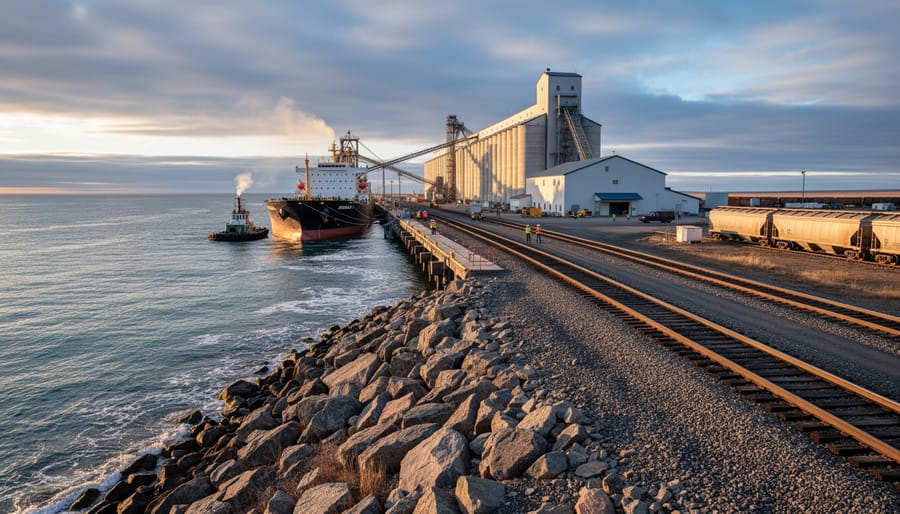
Churchill has moved grain for prairie farmers since the early 1930s, offering a northern shipping route through Hudson Bay to European and overseas markets. For decades, the port provided an alternative to hauling wheat, barley, and oats south to Thunder Bay or west to Vancouver, saving rail distance for producers across central and northern Manitoba. That role abruptly ended in 2016 when grain operations suspended, leaving Thunder Bay and Pacific terminals as the only export options for most Manitoba farmers.
Arctic Gateway Group purchased the port in 2017, reopening it for other cargo in 2019 while working to restore grain handling infrastructure. Grain shipments finally resumed on July 17th, 2026, marking the first movement since 2020 and signaling Churchill’s re-entry into prairie grain logistics. This reopening does not yet translate to day-to-day pricing influence at your local elevator, but it introduces competitive pressure that could reshape freight costs and VPGC grain pricing structures in coming seasons if volumes grow.
| Route | Distance from Central Manitoba | Typical Freight Impact | Market Access | Operational Status (2026) |
|---|---|---|---|---|
| Churchill | Shortest rail haul from northern prairies | Potentially lower for central/northern farms | Direct to Europe, overseas | Grain resumed July 2026, limited volume |
| Thunder Bay | Longer southbound haul | Standard rail rates, established route | Great Lakes to global markets | Fully operational, dominant route |
| Vancouver | Longest westbound haul | Highest freight costs for Manitoba origin | Pacific Rim, Asia | Fully operational, high capacity |
The potential advantage lies in geography. Producers in central Manitoba sit closer to Churchill than to Thunder Bay or the West Coast, meaning lower rail freight per tonne if Churchill can handle sustained grain volumes. Reduced transportation costs would flow back to farmers as higher net prices at delivery, creating competitive pressure on Thunder Bay and Pacific route premiums. Churchill also opens direct access to European buyers without transiting the Great Lakes, appealing to exporters targeting those markets.
As of October 2026, Churchill remains a re-emerging option rather than a routine pricing factor. Elevator bids still reflect established Thunder Bay and Vancouver freight structures because most grain continues flowing through those terminals. Churchill’s influence on what you receive per bushel today depends on infrastructure investment, consistent shipping schedules, buyer confidence, and enough volume to make the route economically viable for grain companies. If those conditions materialize over the next several years, Churchill could shift regional pricing dynamics for Manitoba oat growers, particularly those in the northern half of the province. For now, its role is historical significance and future potential, not a lever moving your elevator’s bid sheet this week.
Selling Oats Yourself vs. Using a Grain Broker
Choosing between marketing your oats directly or working with a grain broker depends on your operation’s size, how much time you can dedicate to price monitoring, and your comfort level with market volatility.
When you sell oats yourself, you control every decision. You call elevators across Manitoba to compare bids, track daily price movements, and negotiate delivery terms directly with buyers. This hands-on approach saves broker fees and works well for smaller producers who can check prices frequently and have the flexibility to deliver when the market moves in their favor. You’ll handle all logistics, scheduling trucks, coordinating delivery windows, and managing cash flow between sales. If you enjoy following commodity markets and have time to monitor price swings throughout the day, direct marketing puts you in the driver’s seat.
A grain broker or marketing advisor brings professional expertise to the table. Brokers maintain relationships with multiple elevators and export terminals, often securing access to buyers you wouldn’t reach on your own. They analyze futures markets, manage hedging strategies to protect against price drops, and time sales to capture market peaks. For larger operations moving substantial volumes, a broker’s market knowledge can offset their service fee, typically a per-bushel charge or percentage of the sale. Brokers also handle contract details and delivery coordination, freeing your time for other farm work.
Consider your risk tolerance, too. If price uncertainty keeps you up at night, a broker can structure forward contracts and hedge positions to lock in acceptable margins. If you prefer gambling on a rally and have storage capacity to wait out low prices, direct marketing gives you that flexibility. Most mid-sized Manitoba farms use a hybrid approach: selling a base volume directly to their regular elevator while consulting a broker for larger lots or complex marketing decisions during volatile periods.
Pros and Cons
Pros
- Direct contact with local elevators gives you real-time bids specific to your delivery point and grain grade.
- Multiple pricing sources (Farmbucks, provincial sites, elevator networks) let you compare offers and negotiate better terms.
- Churchill Port’s July 2026 grain resumption introduces potential future competition that may improve freight economics for central Manitoba producers.
- Understanding the pricing chain helps you identify where to capture more value, whether through timing, delivery location, or grade improvement.
Cons
- Oat prices fluctuate daily based on global markets, currency shifts, and local supply, making it hard to lock in the best rate without constant monitoring.
- Distance to your nearest elevator or terminal directly cuts into your net price through higher trucking and handling costs.
- Churchill’s re-emerging role offers long-term promise but minimal immediate pricing impact, as infrastructure and shipping volume remain limited in 2026.
- Quality discounts for moisture, test weight, or foreign material can significantly reduce your payment below posted prices.
The trade-offs between finding your own local prices and understanding broader market forces shape how effectively you can act on today’s oat market. If you farm near established elevator networks in southern Manitoba, you benefit from competitive bids and frequent price updates. Producers in more remote areas face higher basis costs and fewer delivery options, though Churchill’s gradual expansion could eventually shift that balance. For grain buyers or end users sourcing oats, the same pricing transparency tools give you leverage to negotiate based on current market conditions rather than accepting static quotes. Whether you sell, buy, or simply track oat markets, knowing both the advantages of direct local engagement and the limitations of infrastructure and volatility helps you make smarter decisions in Manitoba’s evolving grain landscape.
Frequently Asked Questions
What is a bushel of oats?
A bushel of oats is a volume measurement equal to 36.37 litres (8 imperial gallons), which weighs approximately 34 pounds or 15.4 kilograms depending on the grain’s density and moisture content. This standard unit allows farmers, elevators, and buyers across Manitoba to price and trade oats consistently.
Why do oat prices vary so much between locations?
Local prices differ based on distance to the nearest grain elevator, rail freight costs to export terminals, the elevator’s current inventory needs, and regional supply competition. An elevator 50 kilometres from a rail line will offer less than one adjacent to the track, because your grain faces higher trucking costs to reach the shipping point.
How often do grain prices update?
Most Manitoba elevators update their bids daily, typically in the morning before 9am Central Time, reflecting overnight changes in global commodity markets and currency exchange rates. Some elevators adjust bids multiple times during the day if market conditions shift significantly.
Can I get a better price by delivering to a different elevator?
Possibly, but you need to calculate the net return after accounting for additional trucking distance and fuel costs. A higher posted price 80 kilometres away might yield less per bushel than a slightly lower bid at your nearest elevator once you subtract the extra transportation expense.
Does Churchill Port offer better oat prices for Manitoba farmers?
As of October 2026, Churchill Port is re-establishing grain operations after resuming shipments in July 2026, but it does not yet routinely handle oat volumes or directly offer pricing to farmers. Future pricing benefits depend on sustained infrastructure investment and consistent shipping schedules, which remain under development.
Will Churchill’s reopening lower my freight costs?
For farms in central and northern Manitoba, Churchill could eventually reduce rail freight compared to hauling grain south to Thunder Bay or west to Vancouver, but the port’s limited current capacity and infrequent sailings mean most producers still rely on established routes in 2026. Freight savings will materialize only when Churchill operates at regular commercial scale with competitive sailing schedules.
If you’re curious about Manitoba’s grain heritage beyond market pricing, Churchill offers fascinating insights into prairie agriculture history. The town’s grain terminal stands as a monument to the region’s connection to global markets, and visitors who travel to Churchill can explore this infrastructure alongside the area’s renowned wildlife. Churchill tourism combines natural wonders with economic history, making it a unique destination to understand how grain logistics shape Manitoba farm income. The port sits at the edge of polar bear country where tundra ecology meets the practical realities of moving prairie harvests to international buyers.
As of October 14, 2026, Manitoba oat prices sit between $2.39 and $4.75 per bushel for 2 CW Oats, but your actual local price depends on where you deliver, what grade you’re selling, and how much volume you bring to the elevator. Finding your specific ‘near me’ price means picking up the phone and calling your nearest grain elevators for today’s bids, checking provincial pricing reports like Farmbucks Manitoba, and comparing offers from multiple buyers within your delivery radius. Distance matters: an elevator 50 kilometers away may post a different number than one in your town, and freight to the buyer eats into what you ultimately pocket.
Churchill Port’s grain resumption in July 2026, after a decade-long suspension, marks a pivotal moment for Manitoba’s agricultural heritage rather than an immediate shift in everyday pricing. The port is re-emerging, not yet a routine pricing force, but its potential to offer shorter rail hauls and competitive freight options could shape future margins for northern prairie producers as volume grows and infrastructure stabilizes. Whether you’re a farmer marketing oats or a traveler drawn to Churchill’s dramatic landscapes and polar bear encounters, the port stands as a living reminder of how transportation, geography, and agriculture intertwine on the prairies. Its story is Manitoba’s story, a blend of resilience, resource movement, and the enduring pull of the North on the region’s economic heartbeat.
