
How Churchill’s Historic Grain Port Shaped the Gateway to the Arctic

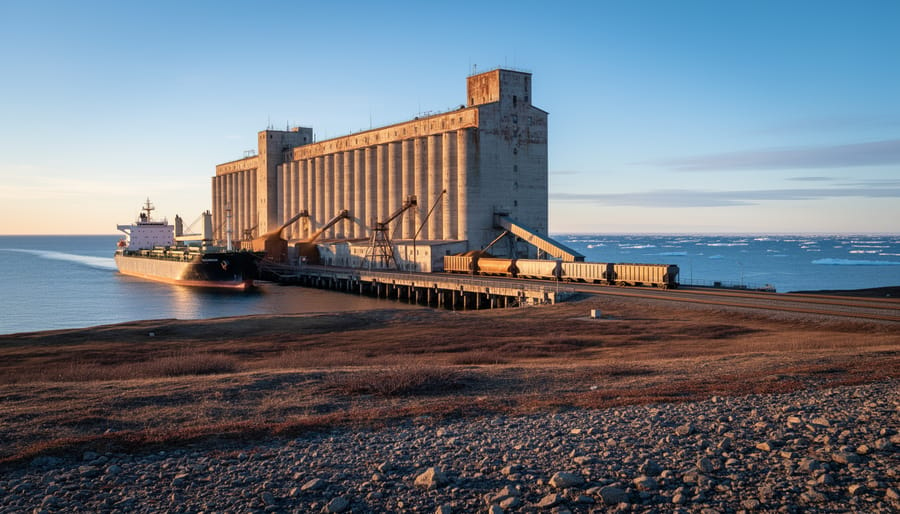
The Port of Churchill stands as a powerful testament to human ambition in one of the world’s most remote locations, where massive grain elevators rise against the Arctic horizon like sentinels guarding the gateway between Canada’s prairie heartland and global markets. For over 90 years, this deepwater port on Hudson Bay has channeled millions of tonnes of wheat, barley, and canola from the Canadian prairies to destinations across the Atlantic, creating a shipping route that cuts thousands of kilometers off traditional transportation corridors.
Picture grain terminals towering seven stories high, their weathered concrete facades speaking to decades of harsh subarctic winters and brief but intense shipping seasons. When vessels arrive each summer, the port transforms into a hub of industrial choreography, where prairie gold flows from railcars into holds bound for Europe, the Middle East, and beyond. These operations have shaped Churchill’s identity as profoundly as its famous polar bears and beluga whales.
Today’s visitors discover how this industrial heritage intertwines with Churchill’s natural wonders, creating an unexpected dimension to their northern adventure. The port facilities serve as dramatic landmarks along the shoreline, offering photographers striking contrasts between human engineering and pristine wilderness. Understanding Churchill’s role in global grain shipping adds depth to any visit, revealing how this small community of fewer than 900 residents maintains connections to international commerce while remaining one of North America’s premier wildlife destinations.
Churchill’s Gateway: Where Prairies Meet the Arctic Ocean
Imagine standing at the edge of the world, where golden wheat fields give way to Arctic tides. Churchill’s position on Hudson Bay might seem impossibly remote—and it is, accessible only by air or train—yet this very isolation made it one of North America’s most ingenious shipping solutions. Nestled where the Churchill River meets the bay, this small subarctic community became Canada’s only Arctic deep-water seaport, a distinction that transformed prairie grain into a global commodity.
The geography tells the story. While most Canadian grain traveled east by rail to Thunder Bay or west to Vancouver, Churchill offered a northern route that sliced shipping distances dramatically. From the wheat fields of Saskatchewan and Manitoba, grain could reach European markets via Hudson Bay and the Atlantic Ocean, bypassing thousands of miles of overland transport.
This strategic advantage wasn’t lost on visionaries who recognized that Hudson Bay, though frozen solid for much of the year, offered a seasonal shipping window perfectly aligned with harvest schedules. The port operates during the brief Arctic summer, typically from July through October, when the bay’s icy grip releases and cargo vessels can navigate the northern waters.
Today’s visitors to Churchill encounter this maritime heritage woven into the town’s fabric. The massive grain elevators remain visible landmarks along the shoreline, standing as weathered sentinels of the port’s historical significance. While you’re more likely arriving to witness polar bears or beluga whales, the industrial silhouettes remind you that Churchill has always been a place where human ambition meets natural grandeur, where practical commerce carved a foothold in one of Earth’s most challenging environments.
The Golden Era: When Grain Built a Town
The Towering Sentinels: Churchill’s Grain Elevators
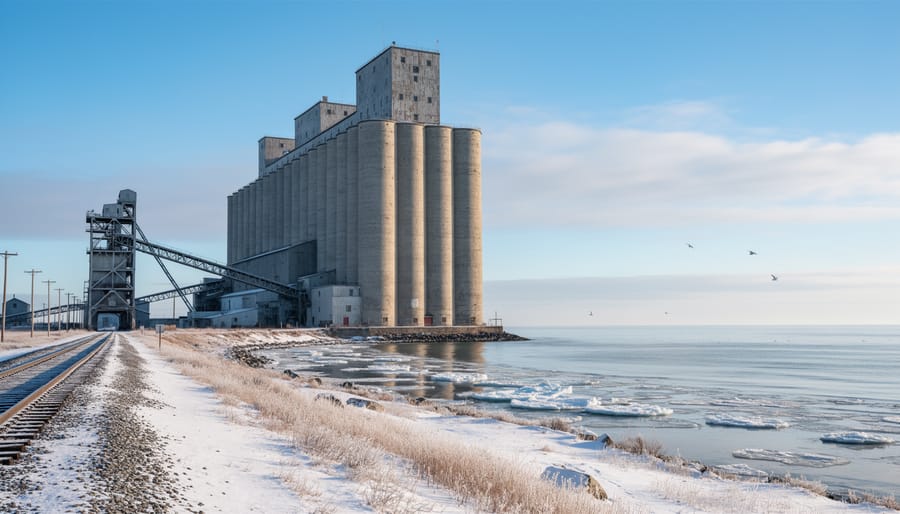
Rising dramatically against Churchill’s northern sky, the grain elevators stand as unexpected monuments to the town’s agricultural legacy. These towering concrete sentinels, visible from nearly every vantage point in Churchill, have become some of the most photographed structures along Hudson Bay’s western shore.
The massive terminals were constructed in stages to handle the flood of prairie wheat destined for international markets. The complex expanded significantly when 56 bins added between 1954-1955 increased storage capacity to meet growing demand from the Canadian heartland.
What makes these structures particularly captivating is how they’ve evolved beyond their industrial purpose. Visitors discover that the elevators offer a striking contrast to Churchill’s natural landscapes, creating a unique visual signature that blends human ambition with wilderness isolation. Their weathered facades tell stories of countless harvest seasons, while their sheer scale demonstrates the engineering required to operate in such a challenging climate.
Photography enthusiasts find endless inspiration in these giants, especially during golden hour when the setting sun casts long shadows across the tundra. The elevators have become integral to Churchill’s identity, appearing in countless travel photos and serving as wayfinding landmarks for both residents and visitors.
Though grain operations have diminished significantly, these structures remain powerful symbols of Churchill’s role in connecting Canada’s agricultural interior to global markets, offering travelers a tangible connection to the region’s economic history.
Challenges and Changes: The Modern Shipping Story
The story of grain shipping at the Port of Churchill reads like a tale of perseverance against formidable odds. Since the first grain shipments departed in the 1930s, the port has weathered cycles of promise and hardship that mirror the resilient spirit of Churchill itself.
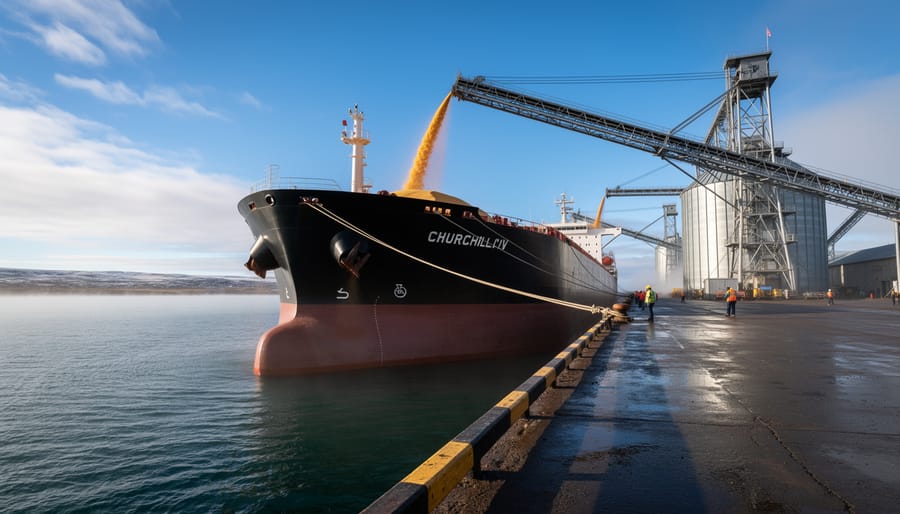
For decades, the port bustled with activity during the brief shipping season, typically running from late July through October when Hudson Bay’s icy grip loosens enough to allow passage. Massive grain elevators, still visible landmarks today, stored wheat from Prairie farms before loading it onto ocean-going vessels bound for international markets. At its peak, millions of tonnes of grain moved through Churchill annually, offering farmers a shorter route to overseas buyers than traditional southern ports.
Yet the port faced continuous challenges. The harsh subarctic climate meant vessels constantly battled ice floes and unpredictable weather. The railway connecting Churchill to southern grain-producing regions required constant maintenance across permafrost and muskeg terrain. Economic pressures mounted as shipping companies weighed the cost of navigating difficult waters against longer but more predictable southern routes.
In 2016, the port ceased grain operations after its owner entered bankruptcy, sending shockwaves through the community. The closure symbolized more than lost jobs—it represented a threat to Churchill’s economic diversity and historic identity as a working port town. The railway also stopped operating, temporarily severing Churchill’s only land connection to the rest of Canada.
Hope returned in 2018 when Arctic Gateway Group, a partnership including local Indigenous groups and investors, purchased both the port and railway. Grain shipments resumed in 2019, marking a triumphant reopening. Today, while operations remain modest compared to historical highs, the port’s revival demonstrates Churchill’s ability to adapt and endure. Visitors witnessing grain ships departing for distant markets are observing a community that refuses to let geography or economics define its limitations, making the port both an industrial facility and a monument to northern determination.
Experiencing Port History During Your Visit
For visitors fascinated by Churchill’s industrial heritage, the grain shipping terminal offers a unique glimpse into the community’s maritime character. While the port’s operations have been intermittent in recent years, the massive infrastructure remains an impressive sight that tells the story of Churchill’s vital role in Canada’s agricultural economy.
The best vantage point for photographing the grain terminal is along the waterfront road leading to the port area. This approach offers sweeping views of the enormous concrete silos rising against the subarctic sky, particularly striking during golden hour when the setting sun casts dramatic shadows across the facility. The contrast between this industrial monument and the pristine waters of Hudson Bay creates compelling compositions for photography enthusiasts. Remember to respect any posted restricted areas and maintain a safe distance from active port operations.
Timing your visit to coincide with potential shipping activity requires some planning. While grain shipments have been sporadic, understanding the seasonal patterns helps visitors appreciate when the port might spring to life:
| Season | Shipping Status | Other Attractions | Weather Notes |
|---|---|---|---|
| July-August | Potential active season | Beluga whales, wildflowers | Warmest temperatures, accessible trails |
| September-October | Late season possibility | Polar bears arriving, northern lights | Cooling temperatures, fewer insects |
| November-June | Port closed (ice) | Winter activities, aurora viewing | Extreme cold, limited daylight in winter |
Even when ships aren’t present, the terminal itself remains an architectural landmark worth visiting. Consider incorporating a port area drive or walk into your Churchill itinerary alongside other historical sites in town. Local tour operators sometimes include commentary about the grain terminal’s history during their guided excursions, providing context about how this facility shaped the community’s development.
The grain terminal represents more than just industrial infrastructure; it embodies Churchill’s enduring spirit of adaptation and resilience. Walking along the shoreline near these towering silos, you’ll gain appreciation for the engineering feat required to build such facilities in this remote location, and understand how generations of Churchill residents have connected their hometown to the broader world through commerce and maritime tradition.
Beyond Grain: Churchill’s Diversifying Port Future
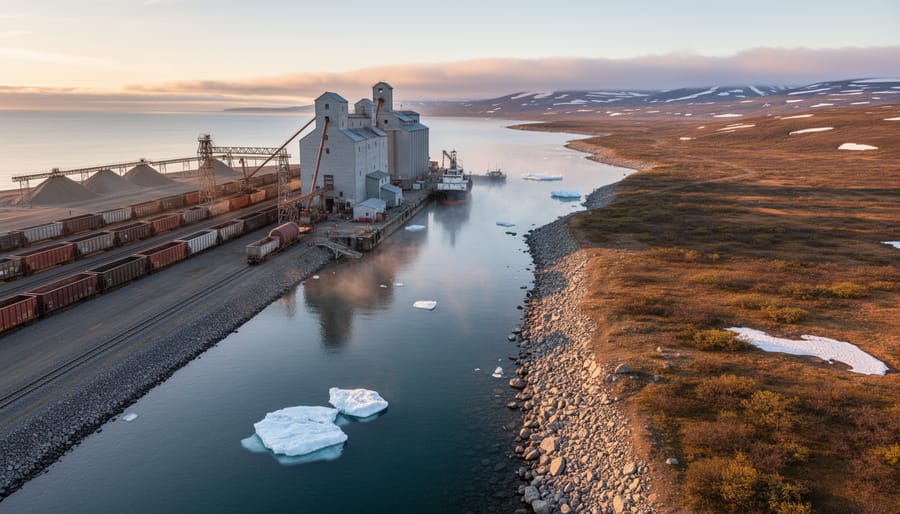
While grain shipping built Churchill’s modern port infrastructure, today’s waterfront tells a story of exciting evolution and adaptation. The Port of Churchill is transforming into a diverse gateway that connects the world to Canada’s Arctic frontier in fascinating new ways.
Climate change, though presenting global challenges, has opened unprecedented opportunities for Arctic shipping routes. The port now sees increased traffic from research vessels studying marine ecosystems, ice patterns, and climate impacts in Hudson Bay. These scientific expeditions bring researchers from around the globe, adding an international dimension to Churchill’s already cosmopolitan character during the brief shipping season.
Tourism vessels have also discovered Churchill’s port as an ideal departure point for Arctic cruises and polar bear viewing expeditions from the water. Imagine witnessing polar bears from a ship’s deck, a perspective few travelers experience. This maritime tourism complements the traditional tundra buggy adventures, offering visitors multiple ways to encounter Churchill’s magnificent wildlife.
The port’s infrastructure supports mineral exploration projects in Nunavut, with equipment and supplies moving through Churchill to remote northern communities. This positions the town as a crucial supply hub for Canada’s expanding northern development, ensuring economic vitality beyond the traditional grain season.
For visitors, this diversification means more reasons to linger at the waterfront throughout your stay. You might witness a Coast Guard icebreaker being resupplied, watch researchers preparing for expeditions, or see cargo destined for distant Arctic communities being loaded. Each vessel that docks carries its own story, making the port a living theater where Churchill’s past as a historic trading post meets its future as an Arctic gateway. This evolving identity ensures that every visit to Churchill offers fresh discoveries and unexpected encounters along its historic shores.
When you visit Churchill, the iconic grain terminal rising against the horizon tells a story that’s as much a part of this remarkable town as the polar bears wandering its outskirts. The Port of Churchill represents more than industrial infrastructure; it’s a testament to human ingenuity in one of the world’s most challenging environments, where Arctic conditions meet global commerce.
As you explore Churchill, take a moment to appreciate how grain shipping has shaped the community you’re discovering. The railway that brought you here was built to connect prairie harvests to tidewater. The resilience you’ll witness in local residents mirrors the determination that kept ships moving through ice-choked waters for decades. The very existence of this northern outpost owes much to its role as a gateway between Canada’s agricultural heartland and international markets.
Today, as Churchill reinvents itself and explores new possibilities for the port, you’re witnessing a community in transition. The grain terminal stands as a powerful reminder that Churchill has always been a place where wilderness and industry coexist, where natural wonders share space with human enterprise. This duality makes Churchill fascinating beyond its wildlife encounters.
When you photograph the massive terminal silhouetted against northern skies or hear locals share memories of bustling shipping seasons, you’re connecting with an authentic layer of Churchill’s identity. This industrial heritage doesn’t diminish the wilderness experience; it enriches it, offering a more complete understanding of what makes Churchill truly unique.
