
Best Time to See Eastern Shore Wildlife Near the Port of Churchill

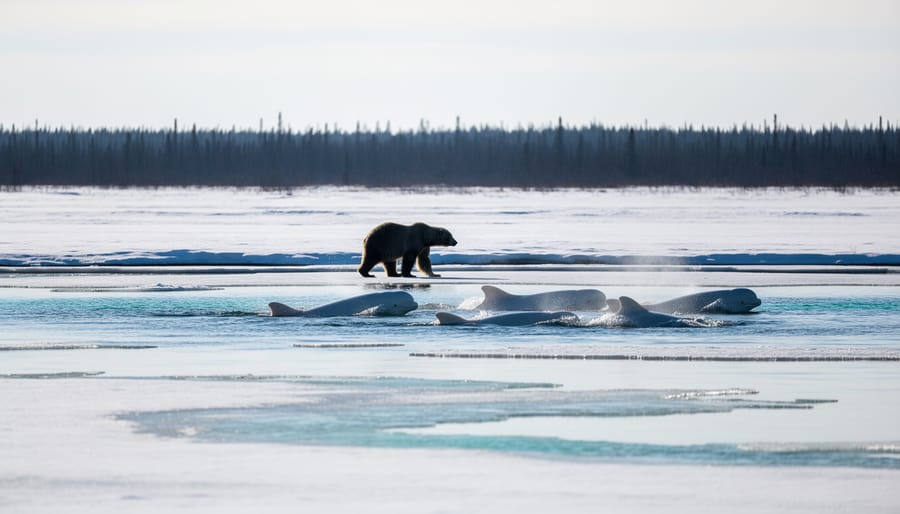
Churchill’s eastern shore transforms with the rhythm of the seasons, and timing your visit correctly means the difference between witnessing one of nature’s greatest spectacles and missing it entirely. For polar bears, plan your journey between late October and mid-November when hundreds gather along Hudson Bay waiting for ice to form. Beluga whales arrive in massive pods from mid-July through early August, turning the Churchill River estuary into a marine mammal nursery. Bird enthusiasts should target late May through mid-June when hundreds of species stop along this critical migratory corridor.
The wildlife calendar here doesn’t follow predictable patterns you’ll find at southern destinations. Ice conditions, weather patterns, and animal behavior shift these windows by days or sometimes weeks, making local knowledge essential for trip planning. What remains constant is Churchill’s position as one of the world’s most accessible places to witness Arctic and subarctic wildlife in their natural habitat. The eastern shore of Hudson Bay serves as a biological crossroads where tundra meets boreal forest, creating habitat diversity that supports an incredible range of species year-round.
Understanding when each animal appears, why those windows shift, and how to plan around Churchill’s extreme climate will ensure your wildlife adventure matches your expectations. This guide breaks down the seasonal timing for every major species and gives you the tools to book your trip with confidence.
Wildlife Seasons Along Churchill’s Eastern Shore
Spring Migration and Awakening (May-June)
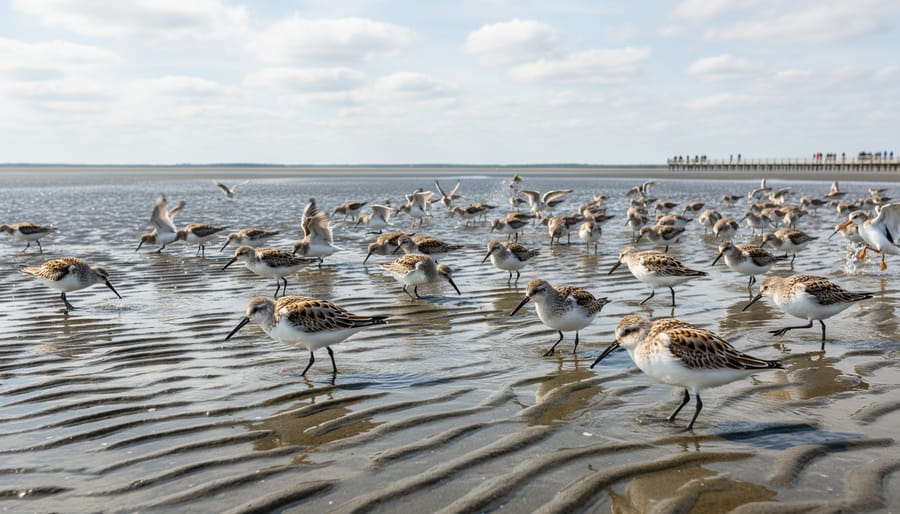
Spring transforms Churchill’s eastern shore into a staging ground for one of the Arctic’s most dramatic wildlife spectacles. As temperatures climb above freezing in May, the landscape sheds its winter severity and bursts into motion. Shorebirds arrive by the thousands, treating the mudflats and tidal zones near the port as essential refueling stops on their journey to northern breeding grounds. You’ll spot sandpipers, plovers, and turnstones probing the exposed shoreline for invertebrates, their feeding frenzy audible from viewing points along the coast.
- Snow geese and Canada geese, flocks congregating in meadows and wetlands east of the port
- Polar bears, lean individuals moving north along the shoreline toward summer ranges
- Arctic fox, active near denning sites in rocky areas along Hudson Bay
- Red-breasted mergansers and long-tailed ducks, feeding in nearshore waters as ice retreats
- Tundra swans, resting in shallow ponds during their northern migration
Polar bears present a different picture in spring than during fall’s famous congregation. These are not the robust, well-fed bears waiting for ice; they’re thinner, hungry animals that spent months on the bay hunting seals. By late May and June, they drift northward along the eastern shore, following the retreating ice edge or heading inland to wait out the ice-free season. Arctic foxes become conspicuous as they tend dens and hunt ground-nesting birds, their white winter coats transitioning to brown summer pelage. The shore itself comes alive with invertebrates, attracting both resident and migratory species in a brief but intense period of biological productivity.
Summer Beluga Season (July-August)
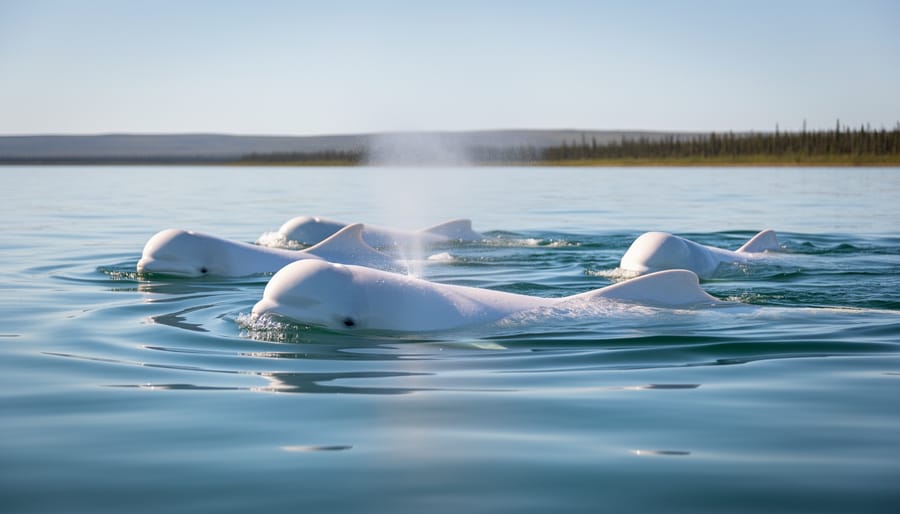
Every July, up to 3,000 beluga whales funnel into the Churchill River estuary and surrounding eastern shore waters, turning the murky shallows into a living canvas of white backs, dorsal ridges, and exhaled mist. The whales arrive to calve, nurse, and molt in the relatively warm brackish waters where the river meets Hudson Bay, creating one of the world’s most accessible marine mammal encounters. Peak numbers cluster between mid-July and mid-August, when kayakers, boat tours, and shore-based observers can watch pods surface mere meters away, their vocalizations audible above the waterline.
Summer also brings nesting activity to the eastern shore’s rocky outcrops and tundra patches. Arctic terns dive for fish along the river mouth, parasitic jaegers patrol for unguarded eggs, and savannah sparrows nest in low vegetation. Arctic hares, sporting their summer brown-gray coats, forage openly on tundra grasses near port access roads, often sitting upright to scan for predators before bounding away. Before heading out, review our Churchill beluga tips for guidance on respectful viewing distances and the best tour operators. The combination of marine and terrestrial wildlife makes July and August Churchill’s most diverse season, with 20-hour daylight allowing extended viewing windows.
Fall Polar Bear Congregation (October-November)
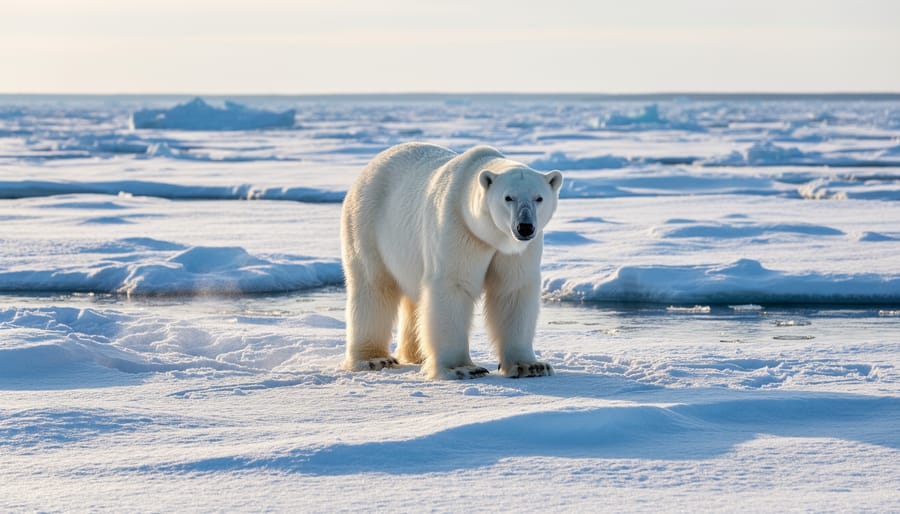
October and November bring Churchill’s most famous wildlife spectacle as dozens of polar bears converge along the eastern shore, waiting for Hudson Bay to freeze solid enough to support their return to the ice. This is peak season for encountering the world’s largest land carnivore, and the areas near the Port of Churchill become staging grounds where bears rest, spar, and conserve energy before their winter hunting season begins.
The congregation typically starts in late October as temperatures drop and shore ice begins forming in shallow bays. Bears emerge from inland summer dens and migrate toward the coast, often following traditional routes that bring them within sight of port facilities and adjacent tundra areas. By early November, concentrations reach their highest levels, with bears visible along beach ridges, rock outcrops, and kelp-strewn shorelines.
Tundra vehicle tours departing from Churchill provide safe, elevated platforms for observing bears at close range without disturbing their natural behavior. You’ll witness sparring matches between younger males, mothers with cubs navigating the coastline, and massive adult bears lounging on seaweed beds. The eastern shore’s topography creates natural funnels where bears concentrate, making this one of the most reliable wildlife viewing experiences on Earth.
Churchill’s reputation as polar bear country reaches its zenith during these weeks. Once the bay freezes, usually by late November, bears disperse onto the ice to hunt seals, and the congregation dissolves until the following autumn. Timing your visit for the second or third week of November typically offers the highest bear numbers combined with reasonable weather conditions for viewing.
Winter Wildlife Experiences (December-March)
Churchill’s winter transforms the eastern shore into an Arctic wonderland where only the hardiest species thrive. From December through March, when temperatures plunge to -30°C or colder, wildlife watching becomes an exercise in patience and resilience, but the rewards are exceptional.
Arctic foxes are the stars of winter along the shore. These compact predators patrol the frozen coastline in their thick white coats, hunting for ptarmigan and scavenging seal carcasses left by bears. You’ll often spot them trotting across sea ice or investigating tide cracks near the port, their bushy tails streaming behind them.
Willow and rock ptarmigan, nearly invisible in their winter plumage, gather in small flocks along windswept ridges where vegetation pokes through the snow. Watch for their sudden bursts of flight, a flash of black tail feathers against white, when they flush from cover.
Snowy owls arrive in varying numbers each winter, perching on ice ridges, shoreline rocks, and even port structures as they scan for lemmings and other prey. Some winters bring dozens; other years just a handful appear.
Polar bears occasionally wander the eastern shore throughout winter, though most are far out on Hudson Bay hunting seals. Those that remain near Churchill are typically young males or pregnant females denning in snowdrifts inland. Winter sightings are uncommon but unforgettable, a massive white form moving across the frozen landscape under the northern lights.
What Influences Wildlife Timing on the Eastern Shore
Ice Formation and Break-Up Patterns
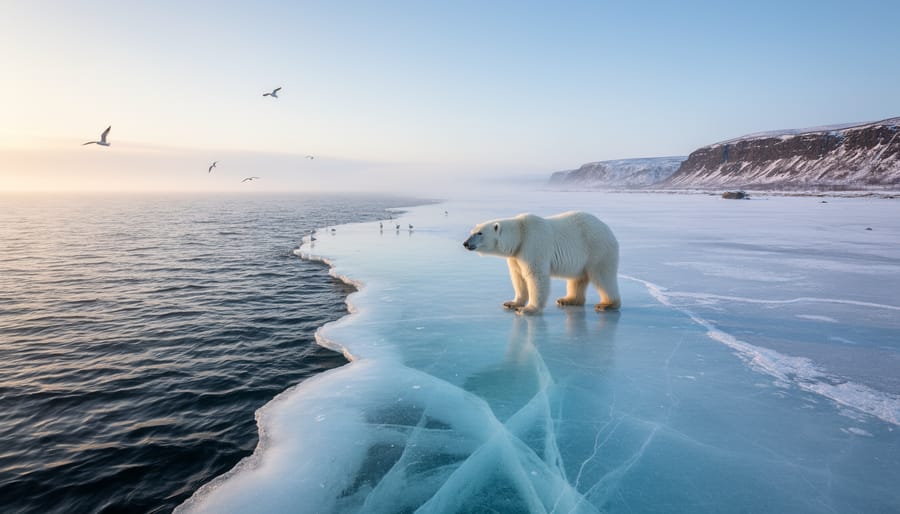
Hudson Bay’s annual freeze-thaw cycle acts as the primary clock governing wildlife movements along Churchill’s eastern shore. Polar bears depend entirely on the sea ice as their hunting platform for ringed seals, their main food source. When the bay freezes, typically from mid-November through early December in recent years, bears leave the shore and venture onto the ice to hunt. Conversely, when ice breaks up in late June or July, bears return to land and congregate along the eastern shore, waiting through a summer fast until freeze-up returns.
Beluga whales follow the opposite pattern. These marine mammals arrive in the Churchill River estuary and eastern shore waters once ice clears in July, taking advantage of warmer, ice-free conditions for calving and feeding. They remain through August before departing as temperatures drop.
These timing windows shift annually based on temperature trends and weather patterns. In warmer years, later freeze-up means polar bears linger longer near the port in autumn, while earlier break-up extends their summer wait on shore. For belugas, earlier ice departure can mean July arrivals happen sooner, though the core viewing window remains consistent.
Climate Variability and Shifting Schedules
Churchill’s eastern shore wildlife operates on a calendar that’s becoming less predictable each year. Warming temperatures in the Hudson Bay region have pushed ice break-up dates earlier by roughly two weeks compared to three decades ago, which cascades through the entire ecosystem. Polar bears now arrive along the shore later in autumn as the freeze-up delays, sometimes shifting peak viewing from late October into mid-November.
Beluga whales respond to these changes too. Warmer water temperatures and altered prey movements can bring them to the Churchill River estuary a week earlier or later than historical averages. Bird migration follows similar unpredictable patterns, Arctic terns and shorebirds adjust their schedules based on insect emergence and nesting conditions that vary with spring temperatures.
Individual weather events amplify this variability. A cold snap in early October might bring bears to the coast earlier than expected, while an unusually warm September could delay their arrival by ten days or more. Storm systems affect when birds stage along the shore during migration.
This growing unpredictability means rigid travel dates carry more risk. Building flexibility into your Churchill visit, even just a few extra days, significantly improves your odds of witnessing the wildlife you came to see.
Food Sources and Breeding Cycles
Hudson Bay’s eastern shore operates on a precise biological calendar where food availability and reproduction drive wildlife movements. Understanding these rhythms explains why certain species appear exactly when they do near the Port of Churchill.
Beluga whales arrive in the Churchill River estuary each July because the shallow, warming waters become rich with capelin, Arctic cod, and other prey fish. Females also use these protected waters for calving, taking advantage of warmer temperatures and reduced predation risk. The belugas depart by late August as water temperatures drop and food sources disperse.
Bird migrations align tightly with insect emergence and plant growth. Snow geese and other waterfowl time their May arrival to coincide with new vegetation growth along the tidal flats. Shorebirds arrive when mudflats teem with invertebrates. Nesting must occur early enough that chicks fledge before autumn freeze-up, creating narrow windows for breeding success.
Polar bears gather along the shore in October and November not to feed, but to wait. After fasting through the ice-free summer, they congregate where Hudson Bay will freeze first, allowing them to return to their primary food source: ringed seals on the sea ice. The bears’ presence depends entirely on ice formation timing rather than terrestrial food availability.
Arctic foxes and other predators follow these patterns, appearing when prey species concentrate for migration or breeding, creating cascading timing effects throughout the eastern shore ecosystem.
Planning Your Eastern Shore Wildlife Experience
Matching Your Visit to Wildlife Priorities
Choosing when to visit Churchill’s eastern shore starts with identifying your must-see species. Polar bear enthusiasts should prioritize October and November, when hundreds of bears gather along the shore, this window offers the most reliable sightings but fills up months in advance. If marine mammals captivate you more than land predators, the July-August beluga season provides daily whale encounters in warmer weather with extended daylight hours, ideal for families or those uncomfortable in extreme cold.
Birdwatchers face a trickier decision. Late May through early June delivers the spectacle of mass spring migration with 200+ species passing through, while summer offers concentrated nesting activity. Time-constrained visitors should consider that polar bear season packs the most iconic wildlife into a short stay, whereas summer beluga viewing allows a more relaxed pace with multiple species present simultaneously.
Budget also shapes the decision. Peak polar bear weeks command premium prices for everything from lodging to tours, while late spring and summer offer better availability and lower costs. If you can only visit once, October combines decent bear activity with autumn bird migration, though you’ll miss belugas entirely.
Accessibility from the Port of Churchill
Getting to eastern shore wildlife areas from the Port of Churchill is straightforward, though your options shift with the seasons and ice conditions. During summer’s beluga season, boat tours depart directly from the port area, offering intimate encounters with whales in the Churchill River estuary and along the shore. Several operators run daily excursions from July through August, with some extending into early September.
For polar bear season in fall, specialized tundra vehicles access eastern shore viewing areas via established trails that run parallel to the coast. Most tours pick up from Churchill town hotels, a short distance from the port, and spend four to six hours traversing the tundra where bears congregate. Some operators offer exclusive port-side departure options for cruise ship passengers.
Winter viewing requires snow vehicles or heated trucks, with fewer but still available guided tours focusing on Arctic foxes, snowy owls, and occasional bears near accessible shore areas. Spring bird watching typically combines walking tours along the shore with vehicle-based excursions to tidal flats and rocky outcrops.
Book popular seasons three to six months ahead. Port accessibility remains excellent year-round, though extreme weather occasionally delays departures.
Booking Timelines and Advance Planning
Book your Churchill wildlife experience 6-12 months ahead if you’re targeting peak polar bear season (October-November) or prime beluga weeks (mid-July through early August). Accommodation fills quickly during these windows, and the best wildlife tours often sell out by spring. Port-area lodges and specialized bear-viewing excursions have limited capacity, making early reservations essential for autumn visits.
Spring bird migration (May-June) and winter wildlife experiences offer more flexibility. You’ll typically find availability 2-4 months out, though booking three months ahead still gives you better lodge selection and tour options.
Last-minute opportunities do exist, particularly for summer beluga season and shoulder periods. Tour operators sometimes release spots within 2-3 weeks of departure due to cancellations. If you’re flexible with dates and accommodation standards, you can occasionally find openings even during popular seasons, but you’re gambling on availability and may miss preferred viewing experiences.
Flight schedules from Winnipeg also constrain timing. Churchill has limited air service, so coordinate your booking with available flights. Train service offers an alternative but requires additional planning time.
Consider travel insurance when booking far ahead. Weather delays and ice conditions can shift wildlife patterns, affecting your planned viewing windows.
Making the Most of Your Wildlife Visit
Essential Gear for Eastern Shore Wildlife Watching
Proper gear transforms eastern shore wildlife watching from endurance test to memorable adventure. Start with layered clothing: a moisture-wicking base layer, insulating fleece or down mid-layer, and a windproof, waterproof outer shell. Hudson Bay winds cut through inadequate jackets even in summer. Pack insulated, waterproof boots rated to at least -40°C for fall and winter visits, you’ll stand still for extended periods watching polar bears or Arctic foxes, and cold feet end outings early.
Quality binoculars (8×42 or 10×42) let you observe belugas offshore and identify bird species without disturbing them. A camera with a telephoto lens (300mm minimum) captures distant wildlife, though smartphones work surprisingly well for belugas during close shore approaches. Bring extra batteries; cold drains them fast.
Seasonal essentials matter: bug nets and DEET for spring and summer blackflies, hand and toe warmers for fall bear season, and ski goggles for winter wind. A small backpack carries water, snacks, and layers you’ll shed and add as conditions shift. Check our first-time tips for comprehensive packing guidance tailored to Churchill’s extremes.
Returning for Different Seasons
Many first-time visitors discover that a single trip to Churchill only scratches the surface of what the eastern shore offers. Each season reveals entirely different wildlife communities and behaviors, making return visits feel like exploring a new destination. A traveler who witnesses October’s polar bear congregation might return in July specifically for belugas gliding through the Churchill River estuary, while bird enthusiasts often schedule separate trips for spring migration and summer nesting periods.
The logistics become easier with experience, once you’ve learned how to get to Churchill and understand the layout of port-adjacent viewing areas, planning subsequent visits feels less daunting. Repeat visitors also benefit from relationships built with local tour operators, who often remember specific interests and tailor experiences accordingly.
Churchill’s wildlife doesn’t follow a rigid script. Return visits increase your chances of witnessing rare moments: a summer Arctic fox with kits, an unusually early ice freeze that brings bears closer to shore, or exceptional northern lights displays over winter wildlife landscapes. The eastern shore rewards patience and multiple encounters across seasons.
At-a-Glance Details
Churchill’s eastern shore wildlife viewing opportunities vary significantly by season, and success depends on aligning your visit with the species you most want to encounter. This quick-reference table highlights the optimal timing windows and practical considerations for different wildlife priorities near the Port of Churchill.
| Wildlife Priority | Best Months | Peak Window | Access Considerations |
|---|---|---|---|
| Polar Bears | October-November | Late October | Tundra vehicles required; book 8-12 months ahead |
| Beluga Whales | July-August | Mid-July to early August | Boat tours and shore viewing; moderate advance booking |
| Bird Migration | May-June | Late May | Shore walks accessible; binoculars essential |
| Arctic Fox & Winter Wildlife | December-March | January-February | Extreme cold; dog sledding and guided tours available |
Each season brings distinct conditions and wildlife behaviors. Spring visitors enjoy milder temperatures and migrating birds returning to nest along the shore. Summer offers comfortable weather for extended outdoor viewing, particularly during the beluga congregation. Fall delivers the most dramatic wildlife spectacle with polar bears gathering in numbers, though temperatures drop significantly. Winter requires serious cold-weather preparation but rewards hardy travelers with pristine Arctic landscapes and unique wildlife encounters in crystalline light.
Common Questions About Eastern Shore Wildlife Timing
Visitors planning their Churchill wildlife adventure often have similar questions about timing and expectations. Understanding these common concerns helps you set realistic goals and make the most of your eastern shore experience.
Can you see polar bears and belugas on the same trip?
Unfortunately, no, their seasons don’t overlap. Belugas arrive in July and August when Hudson Bay is ice-free, while polar bears congregate along the shore from October to November waiting for the bay to freeze. You’ll need to choose which species takes priority or plan separate visits.
What happens if ice timing is unusual this year?
Wildlife schedules shift with ice conditions, sometimes by several weeks. Polar bears may arrive earlier or later depending on freeze-up, and belugas adjust their departure based on water temperatures. Local tour operators monitor conditions closely and can advise on current patterns, but some flexibility in your dates increases your chances of success.
Is wildlife guaranteed during peak seasons?
While sightings are highly probable during peak windows, especially for polar bears in late October and belugas in late July, wild animals follow their own schedules. Weather, food availability, and individual animal behavior all play roles. Most visitors during prime seasons see their target species, but nature never offers absolute guarantees.
What’s the best time for first-time visitors to Churchill?
Late October through early November offers the most dramatic experience, with dozens of polar bears along the eastern shore and excellent chances for Arctic fox, ptarmigan, and sometimes snowy owl sightings. The landscape is stunning, tour infrastructure is well-established, and you’ll witness behavior you won’t see anywhere else on Earth.
Many travelers wonder about viewing distances and safety protocols for eastern shore wildlife encounters. Tour operators maintain strict guidelines that protect both visitors and animals. For polar bears, you’ll typically observe from specialized tundra vehicles that keep you safely elevated while allowing close approaches, often within 20 to 30 feet when bears approach the vehicle out of curiosity. Beluga watching happens from boats in the Churchill River estuary, where whales frequently surface near vessels, sometimes close enough to hear their vocalizations. Shore-based bird watching and Arctic fox sightings happen at naturally safe distances, though foxes near town can be surprisingly bold.
The unpredictability of wildlife timing actually adds to Churchill’s appeal rather than detracting from it. Experienced guides read environmental cues, ice formation rates, temperature trends, prey movements, to adjust daily routes and maximize your chances. This adaptive approach means your specific experience will be unique, shaped by that year’s conditions and the individual animals present during your visit.
Churchill’s eastern shore stands among the planet’s most remarkable wildlife destinations, where the seasonal pulse of Hudson Bay orchestrates an ever-changing parade of Arctic life. Unlike conventional wildlife viewing areas, this landscape rewards those who sync their visits with nature’s calendar, whether you’re drawn to thousands of belugas darkening the river estuary in summer, polar bears prowling the frozen shoreline in fall, or the explosive bird migrations of spring.
The Port of Churchill provides rare accessibility to these pristine eastern shore habitats, eliminating the expedition-level logistics that typically separate travelers from Arctic wildlife. Each season offers distinct experiences rather than better or worse timing. A July visitor watching belugas won’t see October’s polar bear congregation, just as November’s bear enthusiasts miss the intimate whale encounters of summer.
Planning around your wildlife priorities transforms a good trip into an unforgettable encounter with species found nowhere else at such accessible latitudes. Hudson Bay’s rhythms have governed life here for millennia. By aligning your visit with these natural patterns, you’re not just observing wildlife, you’re participating in one of Earth’s great seasonal dramas, witnessed from the unique vantage point of Churchill’s eastern shore.
