
Race Across the Tundra: What Makes Churchill’s Dog Sledding Adventure Unforgettable

The sled runners hiss across the snow, and suddenly you’re flying through Churchill’s frozen wilderness, pulled by a team of Alaskan huskies whose ancestors traveled this same subarctic landscape for centuries. This is dog sledding in Churchill, Manitoba, where the Canadian tundra meets Hudson Bay and winter adventures take on a raw, exhilarating quality you won’t find anywhere else.
Churchill sits at 58 degrees north latitude, perched on the edge of the Arctic where boreal forest gives way to tundra. While many visitors know this remote town for its polar bears and beluga whales, dog sledding reveals a different side of the region. The practice has deep roots here, stretching back to the Indigenous peoples and early fur traders who relied on sled dogs for survival and transport. Even as Churchill’s grain port history brought modern infrastructure to the region, traditional methods of winter travel remained essential to those who called this place home.
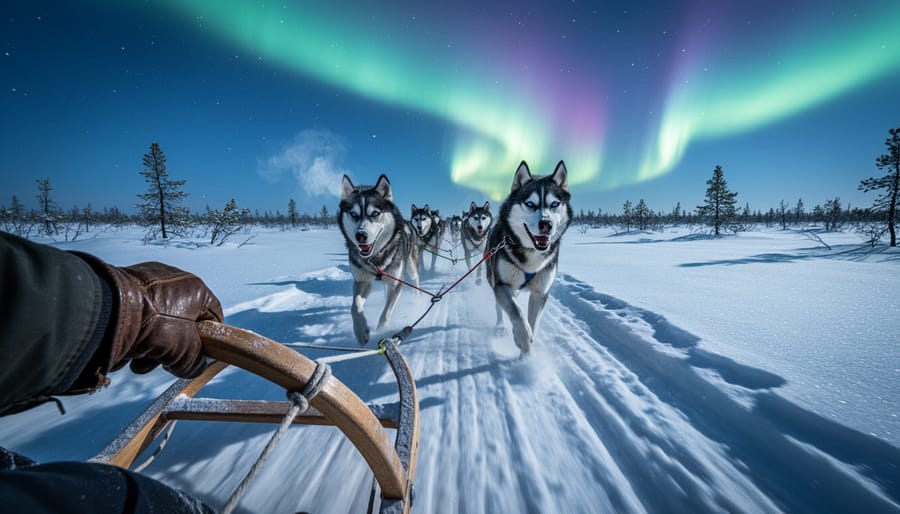
The landscape you’ll cross is unlike anything further south. Temperatures regularly dip below minus 30 Celsius, creating perfect conditions for the hard-packed snow trails that wind through stunted spruce and across open barrens. The light here is different too. Winter brings long twilights that bathe the snow in shades of blue and pink, and if you’re fortunate, the aurora borealis might dance overhead as your team races beneath.
What sets Churchill apart is authenticity. These aren’t tourist attractions dressed up for visitors. Local mushers raise working dogs and maintain traditions passed down through generations. When you grip the handlebar of a sled and give the command to go, you’re participating in a living piece of northern history.
Why Churchill Is Unlike Any Other Dog Sledding Destination
Churchill’s position as Canada’s gateway to the Arctic creates dog sledding conditions that exist nowhere else in North America. The town sits on the edge of the subarctic tundra at 58 degrees north latitude, where the boreal forest gives way to vast, treeless expanses that stretch to the horizon. This transitional zone delivers a landscape unlike the forested trails of Alaska or the mountainous terrain of the Rockies. Here, you race across open tundra where visibility extends for miles, offering unobstructed views of snow-covered plains under endless arctic sky.
The climate itself shapes an exceptional experience. Churchill’s winters bring consistent, deep snow cover from November through April, with temperatures that create the dry, powdery snow ideal for sledding. According to Canadian climate normals the region sees stable cold conditions that keep the snow base firm and fast, unlike the thaw-freeze cycles common in more temperate sledding destinations. This reliability means your run across the tundra happens on pristine snow, not the icy or slushy conditions that plague southern routes.
The wilderness here carries a raw, untouched quality that amplifies the adventure. You’re sledding through polar bear country, across land where caribou migrations have passed for millennia, and along routes where Indigenous peoples traveled long before modern tourism existed. The vastness creates a genuine sense of remoteness. No chairlifts dot the skyline, no lodges interrupt the view. Just you, the dogs, and an expanse of white that seems to merge with the sky.
Churchill’s Hudson Bay coastline adds another dimension. Sledding routes can bring you within sight of the frozen bay, where massive ice formations pile up along the shore and arctic winds sweep unimpeded across the water. This coastal proximity means dramatic weather systems, shifting light, and a dynamic environment that changes throughout the season. The combination of tundra, bay, and arctic air creates sledding conditions that can’t be replicated in landlocked or more southerly destinations.
The Churchill Dog Sledding Experience: What to Expect
Meeting Your Canine Team
The moment you step into the dog yard, the energy is electric. Dozens of eyes lock onto yours, and a chorus of excited howls fills the arctic air. These aren’t just any dogs, they’re athletes, partners, and individuals with distinct personalities that become apparent within minutes of meeting them.
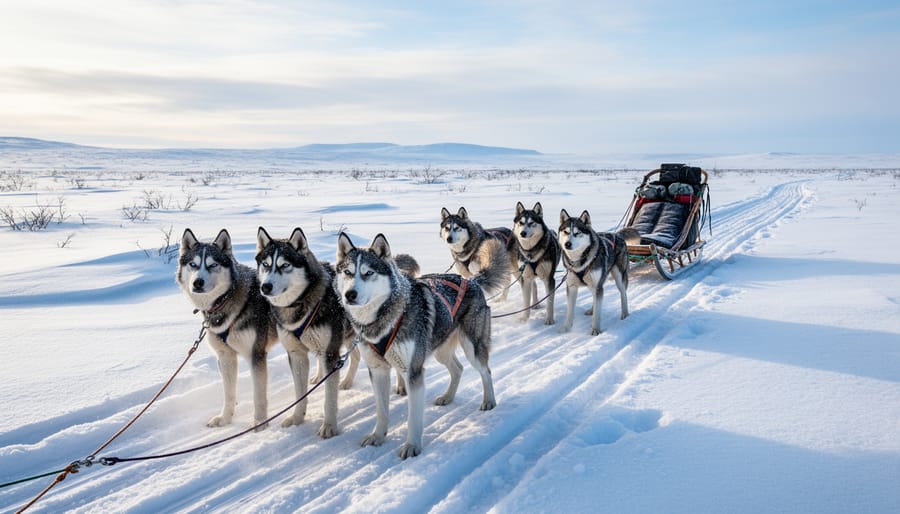
Churchill’s sled dog teams typically consist of Alaskan huskies, a working breed prized for their endurance, speed, and genuine love of running. Unlike their show-bred Siberian cousins, these dogs are built for function: lean, powerful, and tireless. You’ll notice some have one blue eye and one brown, others sport thick double coats in patterns of black, gray, and white. Each has earned their name through quirks of personality, the vocal leader who never stops talking, the mischievous one who steals mitts, the gentle giant who leans against your leg for scratches.
Your musher will introduce you to key team members: the lead dogs who set the pace and respond to commands, the swing dogs who help steer, and the powerful wheel dogs positioned closest to the sled. Watch how they interact, the experienced leads command respect, while younger dogs bounce with barely contained excitement.
As harnesses are checked and the team is hitched, you’ll see the transformation. These friendly, affectionate animals become focused athletes, their bodies trembling with anticipation. They know what’s coming, and they can’t wait to run.
The Run: From First Commands to Final Stretch
The musher’s call of “Hike!” cuts through the arctic air, and suddenly you’re moving. The sled lurches forward as the team hits their stride, and within seconds you’re gliding across Churchill’s vast tundra. The runners hiss against packed snow, a steady rhythm that becomes the soundtrack to your journey.
Speed builds quickly. These aren’t leisurely park rides, husky teams can reach 20 miles per hour on flat terrain, and you feel every bit of that velocity. Cold air rushes past your face, sharp and exhilarating. Your hands grip the sled’s rail as you lean into turns, trusting the musher’s weight shifts and the dogs’ instinctive coordination.
The landscape transforms as you travel. What looked like flat white emptiness from the kennel reveals itself as rolling contours, frozen lakes, and sparse treelines. On clear days, the horizon stretches endlessly, with nothing but snow meeting pale blue sky. The silence between the dogs’ breathing and paw-falls is profound, no engine noise, no traffic, just wind and movement.
Watch the team work. Lead dogs respond to voice commands you’ve just learned, their ears swiveling at “Gee” for right turns or “Haw” for left. The middle dogs provide power and momentum, while wheel dogs nearest the sled manage the heavy pulling. Their athleticism is mesmerizing, muscles rippling beneath thick fur, tails high, clearly doing what they were bred to love.
Most runs last 30 to 45 minutes, covering three to five miles of terrain. Time compresses differently out here. Minutes feel both fleeting and expansive as the tundra scrolls past, each moment distinct yet part of one seamless arctic ballet.
Learning the Musher’s Craft
Most Churchill tours offer hands-on instruction beyond simply riding as a passenger. Your guide will teach you the essential voice commands that mushers use, “hike” to go, “gee” for right turns, “haw” for left, and “whoa” to stop. These simple words carry surprising authority when delivered with the right tone, and you’ll quickly understand why clarity matters when ten eager dogs are pulling at full speed.
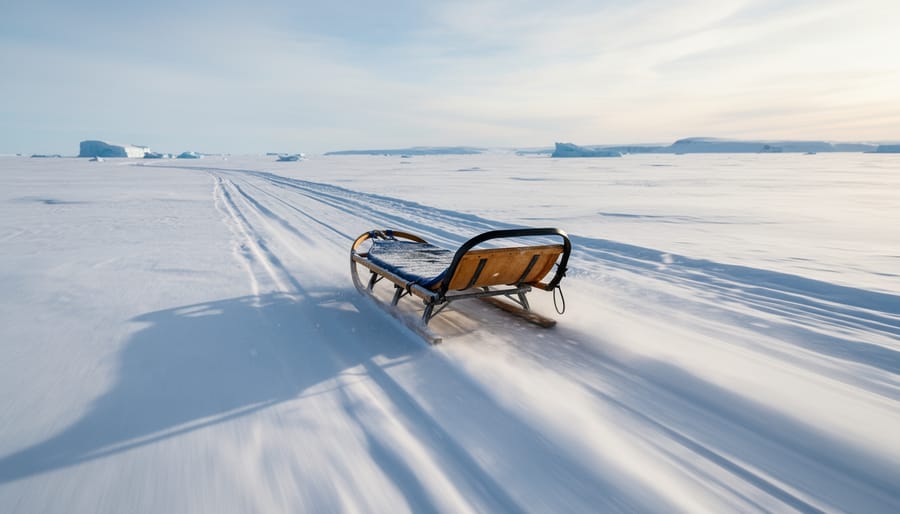
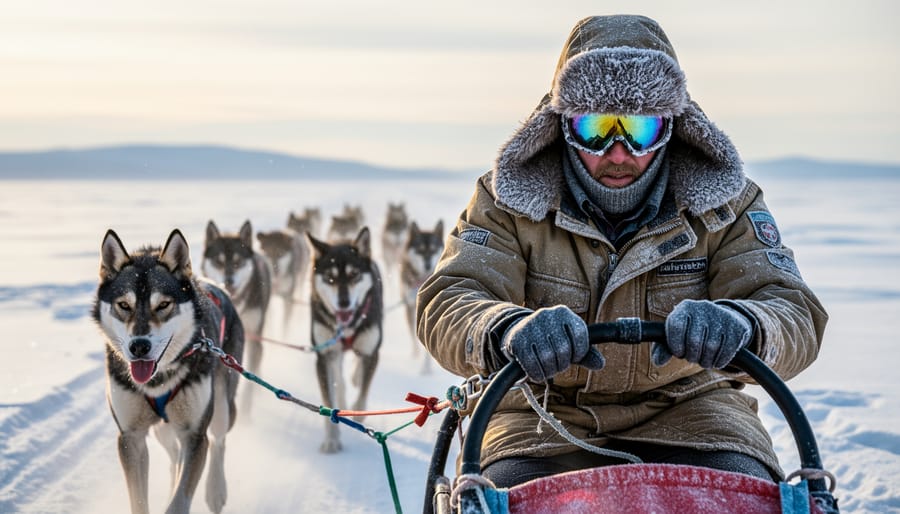
Many operators let you take control of the sled on straightforward stretches of trail. Standing on the runners with the handlebar gripped tight, you’ll feel the immediate connection between your balance, the dogs’ energy, and the terrain beneath you. Your guide stays close, coaching you on weight distribution during turns and when to use the brake, a metal bar you step on to slow momentum.
Learning to read the dogs’ body language adds another dimension to the experience. You’ll notice how the lead dogs watch for commands, how the team’s pace shifts with terrain changes, and how they communicate with each other through subtle movements. This brief apprenticeship transforms you from spectator to participant, offering genuine respect for the skill that professional mushers develop over years of working with their teams across Churchill’s demanding landscape.
Best Times for Dog Sledding in Churchill
Churchill’s dog sledding season typically runs from late October through early April, though the prime window for most visitors falls between November and March. Each period within this span offers distinct conditions and experiences, shaped by Churchill’s subarctic climate and dramatic seasonal shifts in daylight.
November marks the season’s opening, when fresh snow blankets the tundra and temperatures hover between -15°C and -25°C. The landscape transforms into a pristine white canvas, though daylight is limited to roughly six hours. December brings deeper cold and even shorter days, about four hours of natural light, but also the possibility of witnessing the northern lights dancing overhead during your expedition.
| Month | Conditions | Daylight Hours | Other Experiences |
|---|---|---|---|
| November, December | -15°C to -30°C, fresh snow, building ice | 4-6 hours | Northern lights, early winter wildlife |
| January, February | -25°C to -35°C, peak cold, stable conditions | 6-8 hours | Aurora viewing, winter photography |
| March, April | -15°C to -25°C, increasing sun, firmer snow | 10-12 hours | Polar bear returns, spring wildlife activity |
January and February represent peak sledding season. The snow pack is firmly established, trail conditions are at their best, and temperatures, while brutally cold at -25°C to -35°C, create the crisp, dry snow that sled dogs thrive in. Daylight extends to seven or eight hours, providing ample time for longer expeditions without compromising visibility.
March through early April offers a sweet spot for many visitors. Temperatures moderate slightly, daylight stretches to ten or twelve hours, and the strengthening sun adds warmth to your face as you race across the snow. The tundra remains fully frozen, but the increasing light brings renewed energy to the landscape. This period also coincides with polar bears beginning their return to the coast, allowing you to potentially combine dog sledding with early bear viewing.
For 2026 planning, book tours running mid-January through March for the most reliable conditions and the fullest range of daily departure times. Shoulder months offer solitude and unique charm but require flexibility with weather.
Choosing Your Dog Sledding Tour
Churchill’s dog sledding operators offer experiences ranging from quick two-hour introductions to immersive multi-day expeditions that take you deep into the tundra wilderness. Your choice depends on how much time you have, your fitness level, and whether you want a taste of mushing or a transformative arctic journey.
**Half-Day Discovery Tours**
These three to four-hour excursions give newcomers a genuine sledding experience without requiring a full-day commitment. You’ll meet the dog team, receive basic instruction, and enjoy a run across the tundra with enough time to try handling the sled yourself. Most tours include hot drinks and a chance to interact with the dogs before and after your run. These work well if you’re combining sledding with other Churchill activities, allowing you to learn Churchill’s background or spot polar bears in the same trip.
**Full-Day Adventures**
Six to eight-hour excursions offer a more comprehensive experience. You’ll cover greater distances, pause for a shore lunch cooked over an open fire, and have substantial time learning mushing techniques. The extended timeframe means you can travel farther from town, experiencing the tundra’s profound silence and potentially encountering wildlife. These tours suit active travelers who want deeper immersion but need to return to Churchill accommodations each evening.
**Multi-Day Expeditions**
Two to five-day journeys represent dog sledding at its most authentic. You’ll travel significant distances across the tundra, camp in heated prospector tents or remote cabins, and live according to the rhythm of the dog team. Days begin with feeding and harnessing dogs, continue with hours of sledding through varied terrain, and end with evening dog care routines. These expeditions require moderate fitness, you’ll help with camp chores and occasionally run alongside the sled on uphill sections, but they don’t demand elite athleticism.
**Private Versus Group Tours**
Private tours offer flexibility in pace, route choices, and the amount of hands-on mushing you do. Group tours (typically four to eight participants) cost less and bring camaraderie, though you’ll share driving time. Solo travelers often find group tours an excellent way to meet fellow adventurers.
Consider booking well ahead for 2026, especially if you’re visiting during the popular February through April window when demand peaks.
Preparing for Your Arctic Dog Sledding Adventure
Success on the tundra starts with proper preparation. The Churchill winter environment demands respect, temperatures regularly dip to -30°C or colder, and wind can make conditions even more severe. But with the right gear and mindset, you’ll stay comfortable and focused on the incredible experience unfolding around you.
Layering is your most important strategy for staying warm. Start with moisture-wicking base layers that pull sweat away from your skin. Add insulating mid-layers like fleece or wool, then finish with a windproof, waterproof outer shell. Many tour operators provide insulated snowsuits and heavy-duty boots, but confirm what’s included when you book. Bring your own thermal underwear, warm socks (wool or synthetic, never cotton), and neck warmers or balaclavas to protect exposed skin.
Essential items and clothing for your sledding adventure include:
- Insulated, waterproof gloves or mittens with liners (mittens are warmer)
- Hand and toe warmers for extra protection in extreme cold
- Ski goggles or sunglasses to shield eyes from wind and bright snow glare
- Sunscreen and lip balm with SPF, as winter sun reflects intensely off snow
- A small backpack for water, snacks, and extra layers
- Camera with spare batteries (cold drains them quickly)
Physical preparation matters less than you might think. Dog sledding doesn’t require exceptional fitness, though a basic level of mobility helps you get on and off the sled. The ride itself is mostly passive, with the dogs doing the hard work. If you’re trying your hand at mushing, expect to use your legs for balance and occasionally help push the sled, but guides adjust activities to your comfort level.
Mentally, prepare for sensory intensity. The silence of the tundra broken by panting dogs, the sharp cold against your face, the speed across pristine snow, it’s exhilarating but can feel overwhelming at first. Trust your guide, listen to instructions carefully, and give yourself permission to simply experience the moment rather than capturing every second on camera.
Tour operators prioritize safety with experienced mushers, well-trained dog teams, and emergency protocols. Most adventures accommodate various fitness levels, but discuss any mobility concerns or medical conditions when booking. Some operators offer adaptive equipment or modified experiences to increase accessibility. The goal is ensuring everyone can safely enjoy this remarkable arctic tradition.
Beyond the Sled: Combining Your Adventure with Churchill’s Other Wonders
Churchill offers far more than dog sledding alone. Planning a few extra days allows you to experience the full scope of this remarkable arctic town.
The most famous Churchill attraction remains polar bear viewing. If you visit between October and November, you can combine your dog sledding adventure with prime bear-watching season. Churchill Wilderness Tours and other operators offer tundra buggy excursions that bring you safely close to these magnificent creatures in their natural habitat. Winter visitors might spot bears denning or catch glimpses of them along Hudson Bay’s frozen shoreline.
Beluga whales arrive in massive numbers during summer months (July and August), creating spectacular viewing opportunities. These friendly white whales gather in the Churchill River estuary by the thousands, making snorkeling or kayaking with belugas a bucket-list experience for warm-season travelers.
The town’s history runs deep. The Prince of Wales Fort, a partially restored stone fortress dating to the 1700s, stands as a testament to the fur trade era and British colonial ambitions. You can explore the historic grain port that once defined Churchill’s economic identity, learning how this remote community became a vital shipping hub.
The Itsanitaq Museum houses an impressive collection of Inuit carvings and artifacts, offering insight into northern Indigenous cultures. Local cultural centers also provide opportunities to connect with Cree and Inuit traditions through art, storytelling, and cuisine.
Night skies here deliver some of the world’s finest aurora borealis displays. Churchill sits directly beneath the auroral oval, making northern lights visible roughly 300 nights per year. After your dog sledding run, bundle up and watch the sky dance with green and purple curtains of light.
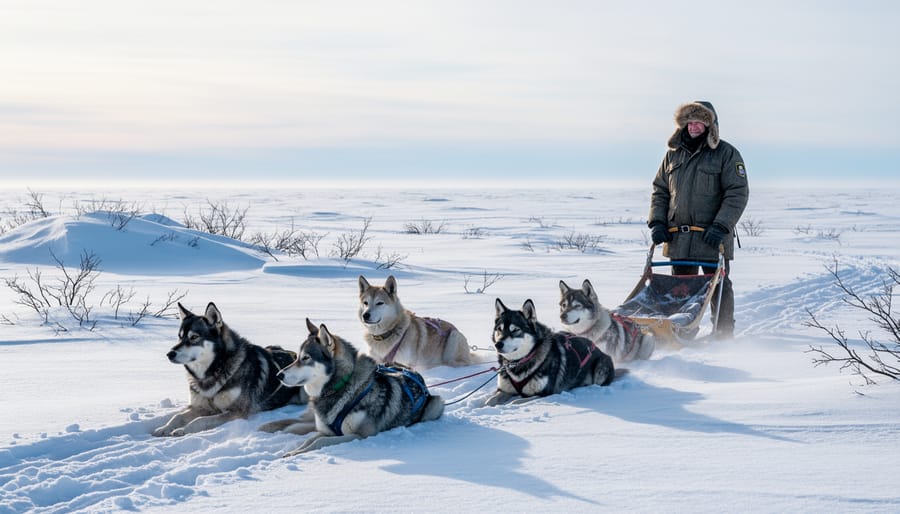
The moment a sled dog team launches across Churchill’s frozen landscape, something shifts. The modern world falls away, replaced by the rhythmic padding of paws, the whisper of runners on snow, and an arctic silence so profound it becomes its own presence. This isn’t simply an activity to check off a bucket list, it’s an immersion into a way of life shaped by necessity, perfected over generations, and preserved in one of the planet’s most remarkable wilderness settings.
Churchill’s combination of accessible tundra, exceptional winter conditions, and deep-rooted mushing traditions creates an experience you won’t replicate elsewhere. Whether you’re drawn by the thrill of racing behind a team of eager huskies, the chance to connect with these remarkable working dogs, or the opportunity to witness the arctic’s raw beauty from a perspective few ever encounter, Churchill delivers an adventure that stays with you long after the dogs have been fed and the sleds stored away.
As you plan your 2026 visit, consider exploring local history before your trip to deepen your understanding of this unique northern community. Then bundle up, lean into that first exhilarating push across the snow, and let Churchill’s winter wilderness reveal why this remains one of the north’s most unforgettable adventures.
