
7 Essential Tips for Visiting Churchill Canada: What Every First-Time Visitor Needs to Know

Planning a visit to Churchill, Canada requires careful preparation for one of the world’s most extraordinary wildlife destinations. This remote subarctic town on the shores of Hudson Bay offers front-row seats to polar bears, beluga whales, and the northern lights, but timing your trip correctly makes the difference between an unforgettable adventure and a costly disappointment.
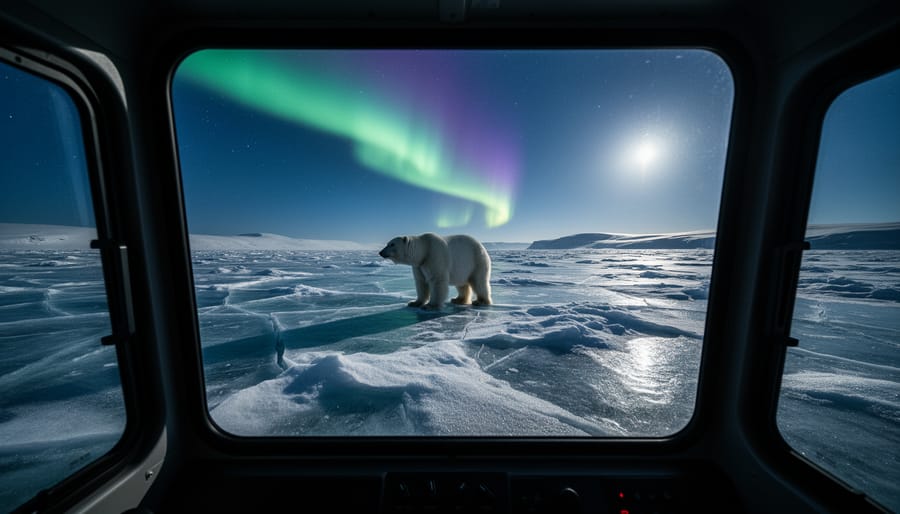
Churchill operates on nature’s calendar. Polar bears congregate here each October and November waiting for the bay to freeze, while thousands of beluga whales arrive in July and August to calve in the warmer waters of the Churchill River estuary. The aurora borealis dances overhead from January through March and again from late August through November, painting the Arctic sky in ribbons of green and purple.
Getting here isn’t simple. There are no roads connecting Churchill to the rest of Manitoba. You’ll fly in from Winnipeg or take the twice-weekly train, a 48-hour journey through boreal forest and tundra. Accommodations book up months in advance during peak seasons, and prices reflect the logistics of operating in Canada’s far north.
But the challenges fade the moment you lock eyes with a polar bear from a specialized tundra vehicle or float among hundreds of curious belugas. Churchill rewards those who plan ahead with experiences found nowhere else on Earth. Here are seven essential tips to help you prepare for this bucket-list destination.
How We Selected These Visitor Tips
We developed these seven tips by analyzing the most frequent challenges and questions from first-time visitors to Churchill, combined with insights from local tour operators, accommodation providers, and travelers who’ve made the journey north. Each recommendation addresses a practical reality of visiting Canada’s most accessible Arctic community, a remote port town with limited infrastructure, extreme seasonal variation, and unique logistical requirements.
The selection prioritizes information that directly impacts your trip’s success: timing decisions that determine what you’ll experience, booking windows that affect availability, weather preparation that ensures comfort and safety, and cost awareness that prevents budget shock. We’ve focused on what you need to know before you arrive, when advance planning makes the biggest difference. These aren’t generic travel tips, they’re specific to Churchill’s geography as a northern port accessible only by air and seasonal rail, its wildlife calendar, and its role as a small community balancing tourism with daily life in a challenging environment.
1. Plan Your Visit Around Churchill’s Seasonal Highlights
Churchill’s dramatic seasonal shifts create entirely different experiences throughout the year, so picking the right time to visit matters more here than almost anywhere else in Canada. Your interests should dictate when you book your trip.
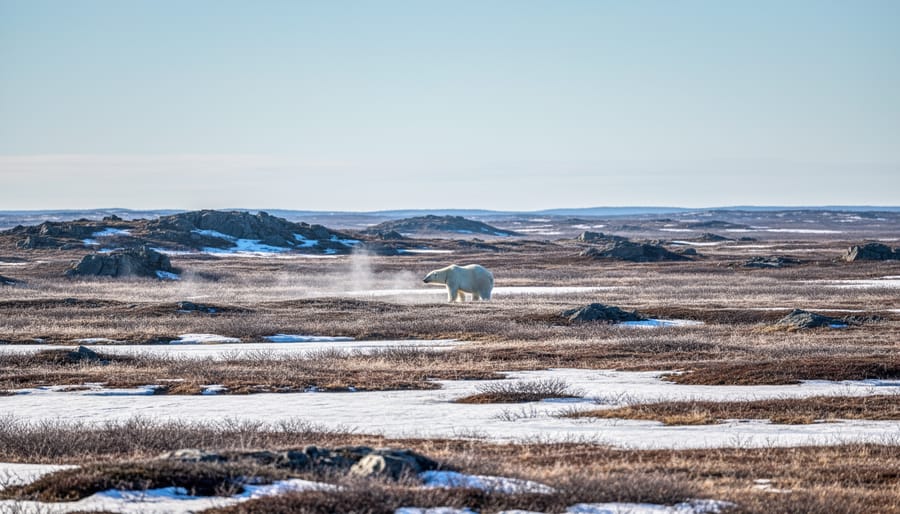
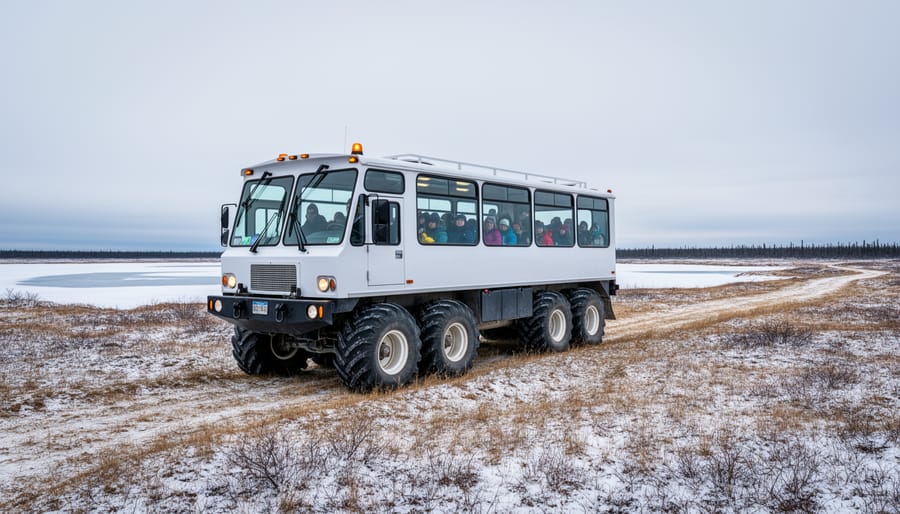
October through early November is polar bear season, when hundreds of bears gather along the Hudson Bay coastline waiting for the sea ice to form. This is Churchill’s busiest period, and for good reason, watching these magnificent animals interact in their natural habitat ranks among the world’s great wildlife experiences. Expect daytime highs around -5°C to -10°C, with windchill making it feel considerably colder. Tours run daily on specialized Tundra Buggies that keep you safe and warm while positioning you at bear level.
Mid-July through August brings a completely different spectacle: over 3,000 beluga whales migrate into the Churchill River estuary’s warmer waters. The belugas are curious and playful, often swimming right up to kayaks and boats. Summer temperatures reach a pleasant 12°C to 18°C, and the tundra explodes with wildflowers and birdsong. This season offers the most comfortable weather and the longest daylight hours, making it ideal for photography and multiple daily activities.
January through March provides the best northern lights viewing. The aurora borealis dances across Churchill’s dark winter skies with remarkable frequency and intensity. Temperatures plunge to -25°C to -35°C, occasionally colder, so this season demands serious cold-weather preparation. Dog sledding and winter cultural experiences complement the aurora hunts.
Each season delivers something spectacular, but Churchill cannot offer everything at once. Choose based on what you most want to see, then prepare accordingly for the weather that comes with it.
2. Book Transportation and Accommodation Well in Advance
Churchill’s isolation means you’re competing for seats and beds on truly limited transportation and lodging options. Calm Air operates the primary scheduled flights into Churchill from Winnipeg, typically once or twice daily depending on the season, while VIA Rail’s train service runs twice weekly during summer months only. Both fill quickly, particularly during peak polar bear viewing season in October and November when demand vastly exceeds supply.
The town’s accommodation capacity is small, with fewer than a dozen hotels and lodges serving visitors. Options range from modest inns to specialized eco-lodges, but even during slower periods, availability can be tight when tour groups or researchers arrive. This scarcity drives prices up and choices down, so flexibility on exact dates can sometimes help, though polar bear season offers little wiggle room.
The Port of Churchill, historically vital for grain shipments and northern supply routes, remains accessible by sea during the brief summer shipping season, though most visitors arrive by air. Train travel via VIA Rail offers a scenic, unhurried alternative from mid-May through early November, taking roughly 45 hours from Winnipeg through boreal forest and tundra, an adventure itself, but requiring advance planning.
Don’t assume last-minute availability exists. Churchill’s remoteness and specialized tourism infrastructure mean spontaneous trips rarely work. Securing your transportation and lodging early isn’t just recommended; it’s essential to actually making your visit happen.
3. Prepare for Arctic Weather Conditions Year-Round
Churchill’s subarctic climate delivers genuine Arctic conditions without the extreme remoteness, but that doesn’t make the weather any less serious. Even summer visitors encounter temperature swings that catch many first-timers off guard, July afternoons might reach a pleasant 15°C (59°F), then plummet to 5°C (41°F) by evening. Winter brings the full Arctic experience, with January temperatures averaging -27°C (-17°F) before windchill, which routinely drops the feel to -40°C or colder.
Windchill matters more in Churchill than anywhere most visitors have experienced. The constant wind off Hudson Bay cuts through inadequate clothing within minutes, turning a manageable -20°C day into a dangerous situation. This isn’t theoretical, frostbite can develop on exposed skin in under ten minutes during polar bear season’s windy November days.
Layering works, but only with the right materials. Start with moisture-wicking base layers (never cotton), add insulating mid-layers like fleece or down, and finish with a windproof, waterproof shell. Your extremities need equal attention: insulated, waterproof boots rated to at least -40°C, heavyweight gloves or mittens with liners, and a hat that covers your ears completely.
For essential gear, pack these items based on your travel season:
- Summer (July-August): Rain jacket, fleece mid-layer, long pants, closed-toe waterproof shoes, bug spray, sun protection
- Fall polar bear season (October-November): Heavy parka, insulated snow pants, winter boots, thick gloves, neck gaiter, warm hat
- Winter (December-March): Expedition-weight parka, thermal base layers, ski goggles, hand/toe warmers, balaclava, double mittens
Don’t own Arctic-rated gear? Several Churchill outfitters rent parkas, boots, and insulated pants, though availability during peak polar bear weeks gets tight. Booking rental equipment when you reserve your tour makes sense, especially for bulky winter boots that take up precious luggage space on those small planes.
4. Budget for Churchill’s Remote Location Pricing
Churchill’s prices reflect the reality of supplying a community accessible only by air and rail, where everything from fresh produce to construction materials arrives via costly northern transportation routes. Expect to pay 30-50% more than southern Canadian cities for groceries, meals, and everyday items. A casual restaurant dinner typically runs $25-40 per person, while a simple breakfast can cost $15-20. Gas stations charge premium rates, and even bottled water carries a higher price tag.
Accommodation and tour costs represent your largest expenses. Mid-range hotel rooms during peak polar bear season (October-November) start around $200-300 per night, with premium lodges reaching $400-600. A full-day Tundra Buggy tour averages $400-500 per person, while beluga whale boat tours run $150-200. Northern lights viewing excursions typically cost $100-150 for a few hours. Multi-day packages can streamline costs but still require substantial budgets, plan on $2,500-4,000 per person for a comprehensive three-day visit including flights, accommodation, and major tours.
Smart travelers offset costs without compromising their experience by booking package deals that bundle accommodation with tours, staying at B&Bs or the more affordable Seaport Hotel, preparing some meals if kitchen access is available, and traveling during shoulder seasons when rates drop. Grocery shopping at the Northern Store allows you to stock snacks and breakfast items rather than eating every meal out. Consider joining group tours rather than private excursions, and prioritize your must-do experiences over trying to pack in everything. The costs are real, but Churchill delivers exceptional value through once-in-a-lifetime wildlife encounters and Arctic experiences unavailable anywhere else at this level of accessibility.
5. Understand Wildlife Safety Protocols and Polar Bear Awareness
Churchill sits squarely in polar bear country, where the southern edge of the Arctic meets Hudson Bay. This isn’t just a tourism tagline, it’s a daily reality that shapes how both residents and visitors move through town. The Polar Bear Alert Program operates year-round to manage human-wildlife interactions, maintaining a hotline (675-BEAR) and employing conservation officers who patrol the community, respond to bear sightings, and relocate animals when necessary. The program exists because polar bears regularly pass through Churchill, particularly during fall when they wait for the bay to freeze.
When you’re on organized tours, you’ll remain inside vehicles or secure viewing structures designed specifically for safe wildlife observation. Tundra Buggies feature elevated platforms that keep you above bear height, while boat tours for beluga watching maintain appropriate distances on the water. If you spot a polar bear from your hotel window or during a guided walk through town, your guide will know exactly how to respond and when to move the group to safety.
Respect viewing distances even when the bears seem calm. These are apex predators, not attractions performing for cameras. The minimum safe distance is 30 meters on foot, though guides maintain greater buffers. Never attempt to feed, attract, or interfere with any wildlife. Flash photography can startle animals, and leaving food waste attracts bears into areas where they may need to be relocated or, in worst cases, destroyed.
This safety framework protects both you and the bears. Churchill’s tourism model works precisely because these protocols are taken seriously. Following them means you’ll witness these magnificent animals in their natural habitat while ensuring future visitors can do the same.
6. Choose Tours That Match Your Mobility and Comfort Level
Churchill’s tours vary significantly in physical demands, duration, and comfort, so matching the right experience to your abilities ensures an enjoyable visit rather than an exhausting one.
The iconic Tundra Buggy rides offer the most accessible wildlife viewing, these heated vehicles with elevated platforms require minimal physical effort beyond climbing aboard and allow comfortable polar bear observation for 6-8 hours. You’ll stand and move around inside the buggy, but it’s suitable for most mobility levels. Boat-based beluga whale tours involve boarding smaller vessels (sometimes zodiac rafts) and spending 2-3 hours on Hudson Bay in summer conditions; expect some bouncing over waves and potentially cool temperatures even in July. Dog sledding experiences range from short rides where you’re a passenger to multi-hour expeditions where you help with the sled, so clarify the activity level when booking.
- Tundra Buggy tours: Low physical demand, wheelchair-accessible options available, best for wildlife photography and extended viewing
- Beluga whale boat tours: Moderate demand with boat boarding required, best for active travelers comfortable on water
- Walking tours of historical sites: Light to moderate demand depending on route length, best for history enthusiasts who enjoy being outdoors
- Northern lights viewing: Minimal physical demand but requires staying warm during stationary night observation, best for patient sky watchers
- Dog sledding: Varies from passive (riding) to active (helping guide), best for adventure seekers wanting hands-on winter experience
Ask tour operators specific questions about bathroom access, rest breaks, and whether you can opt out of portions. Evening northern lights tours involve standing in cold conditions for 1-3 hours, so assess your tolerance for stationary outdoor time in winter. Walking tours of Fort Prince of Wales or downtown historical sites typically cover 1-2 miles over uneven terrain; some operators offer abbreviated routes. Honest self-assessment of your physical comfort zone prevents disappointment and helps you focus on experiences you’ll genuinely enjoy rather than simply endure.
7. Explore Churchill’s Cultural and Historical Significance Beyond Wildlife
Churchill’s story stretches back thousands of years beyond its modern wildlife fame, and first-time visitors who look past the polar bears discover layers of cultural richness that few Arctic destinations can match.
The region served as meeting grounds for Dene, Inuit, and Cree peoples long before European contact, and their legacy shapes the town today. The Itsanitaq Museum houses one of North America’s finest collections of Inuit carvings and artifacts, many dating back centuries. Local artisans still practice traditional skills, and their work appears in galleries along Kelsey Boulevard. Taking time to appreciate this heritage provides essential context for understanding Churchill as a living community, not just a wildlife viewing platform.
The massive grain terminal and port infrastructure dominating the shoreline tell another chapter. The Port of Churchill once shipped millions of bushels of prairie wheat to global markets each season, connecting Hudson Bay to international trade routes in ways that seem almost improbable today. Though grain operations have fluctuated in recent decades, the port remains a vital northern supply link, and its restored facilities offer glimpses into the engineering ambition required to make Arctic shipping viable.
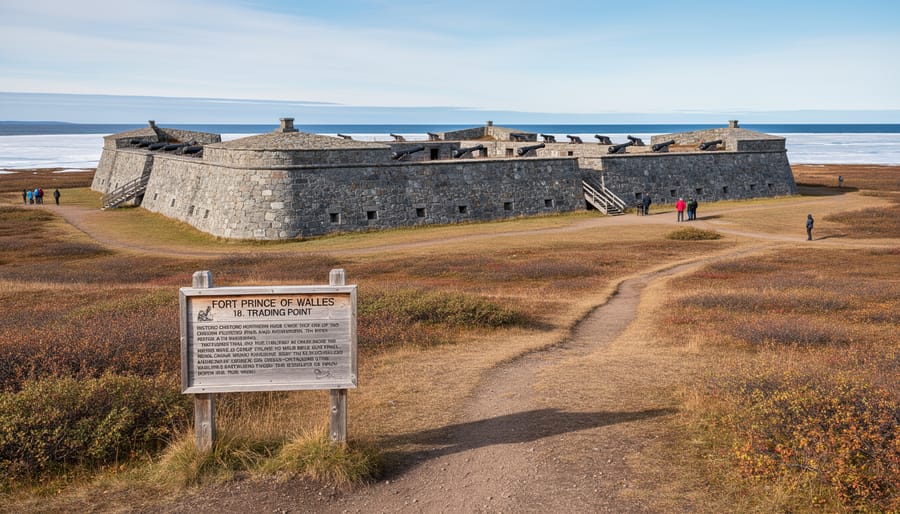
Fort Prince of Wales, the stone fortress visible across the Churchill River, represents 40 years of 18th-century French and British colonial competition. Parks Canada leads summer tours through the remarkably intact structure where you can trace musket ball damage from the 1782 surrender and touch walls built by craftsmen who never saw their project completed.
Plan at least half a day for cultural exploration beyond tour schedules. The Eskimo Museum, local murals depicting northern life, and conversations with longtime residents reveal why Churchill became this particular intersection of natural wonder, Indigenous tradition, military history, and Arctic commerce. The wildlife draws visitors here, but the human stories make the place unforgettable.
Making the Most of Your Churchill Adventure
Churchill rewards those who arrive prepared and leave room for wonder. The seven tips outlined here form your foundation for navigating this Arctic frontier town, but the most memorable moments often come from unexpected encounters, a sudden aurora display, a conversation with a longtime resident, or the quiet stillness of tundra stretching to the horizon.
Your advance planning around seasons, bookings, weather gear, and budget allows you to focus on what truly matters once you arrive: immersing yourself in one of Earth’s remarkable wildlife crossroads and a community shaped by resilience. Respect the protocols designed to protect both you and Churchill’s iconic wildlife. Balance your wildlife ambitions with curiosity about the port’s layered history and the Indigenous knowledge that continues to guide life here.
What if weather prevents me from seeing polar bears or other wildlife?
Wildlife sightings depend on natural patterns, and no tour can guarantee encounters. Reputable operators reschedule when safe, and Churchill’s cultural sites, northern lights, and landscape offer rewarding alternatives during poor weather windows.
Is cell phone service available in Churchill?
Churchill has cellular coverage through Bell and Telus in town and along main tour routes, though service becomes spotty on the tundra. Download maps and essential information before you go.
Should I bring cash or rely on cards?
Most businesses accept cards, but bring some cash for small purchases, tips, and the occasional vendor that’s cash-only. ATMs are available but limited.
What are my dining options in Churchill?
Churchill has several restaurants, cafes, and hotel dining rooms serving everything from comfort food to northern specialties like Arctic char. Grocery stores stock basics, though prices reflect the remote location.
Flexibility matters in Churchill. Train delays happen. Tours adjust for conditions. Weather shifts quickly. Embrace these realities as part of the Arctic experience rather than obstacles. The visitors who find Churchill most rewarding are those who come prepared but stay open to the rhythm of this northern port community where humans, wildlife, and landscape meet on nature’s terms.
